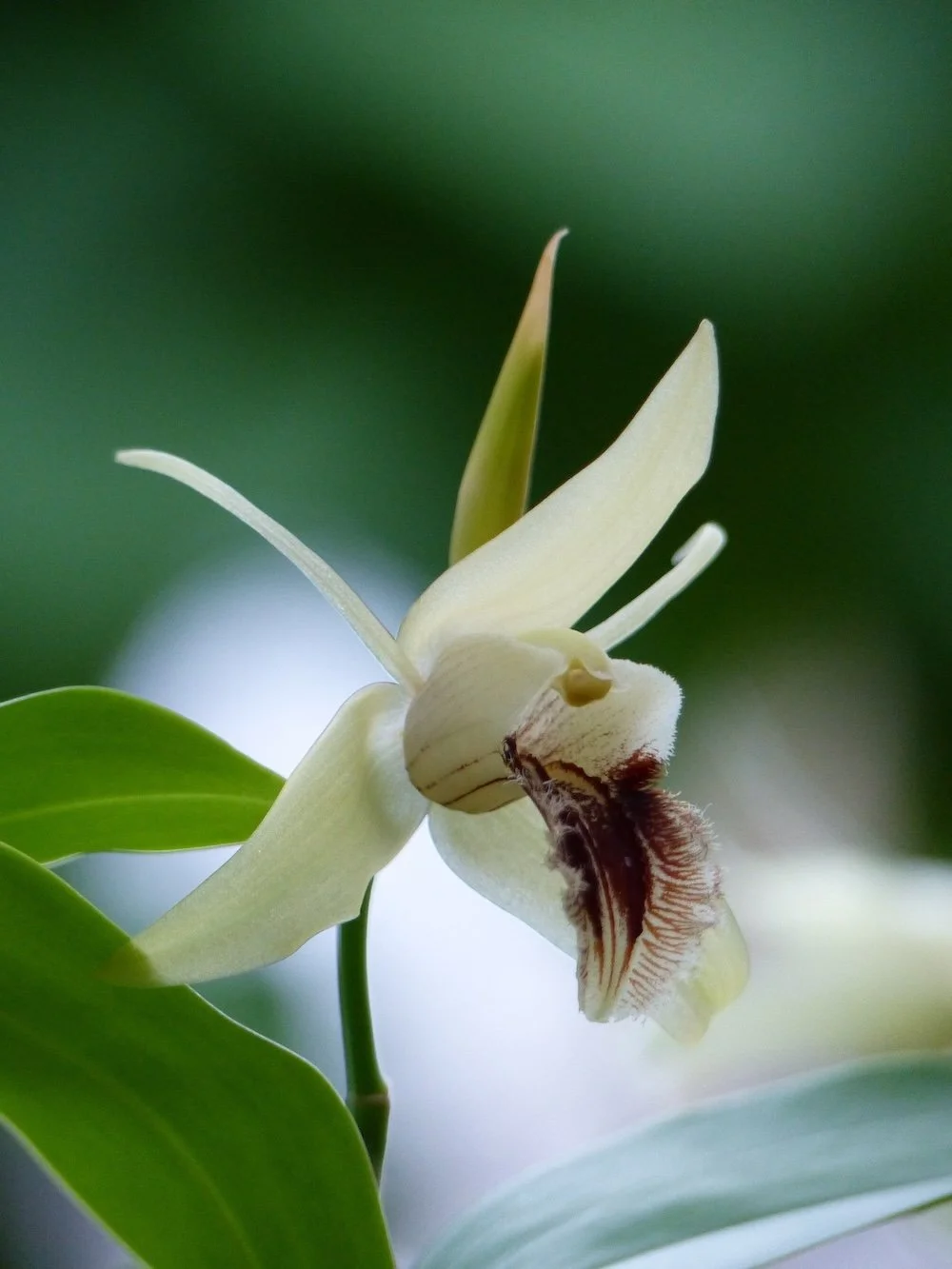
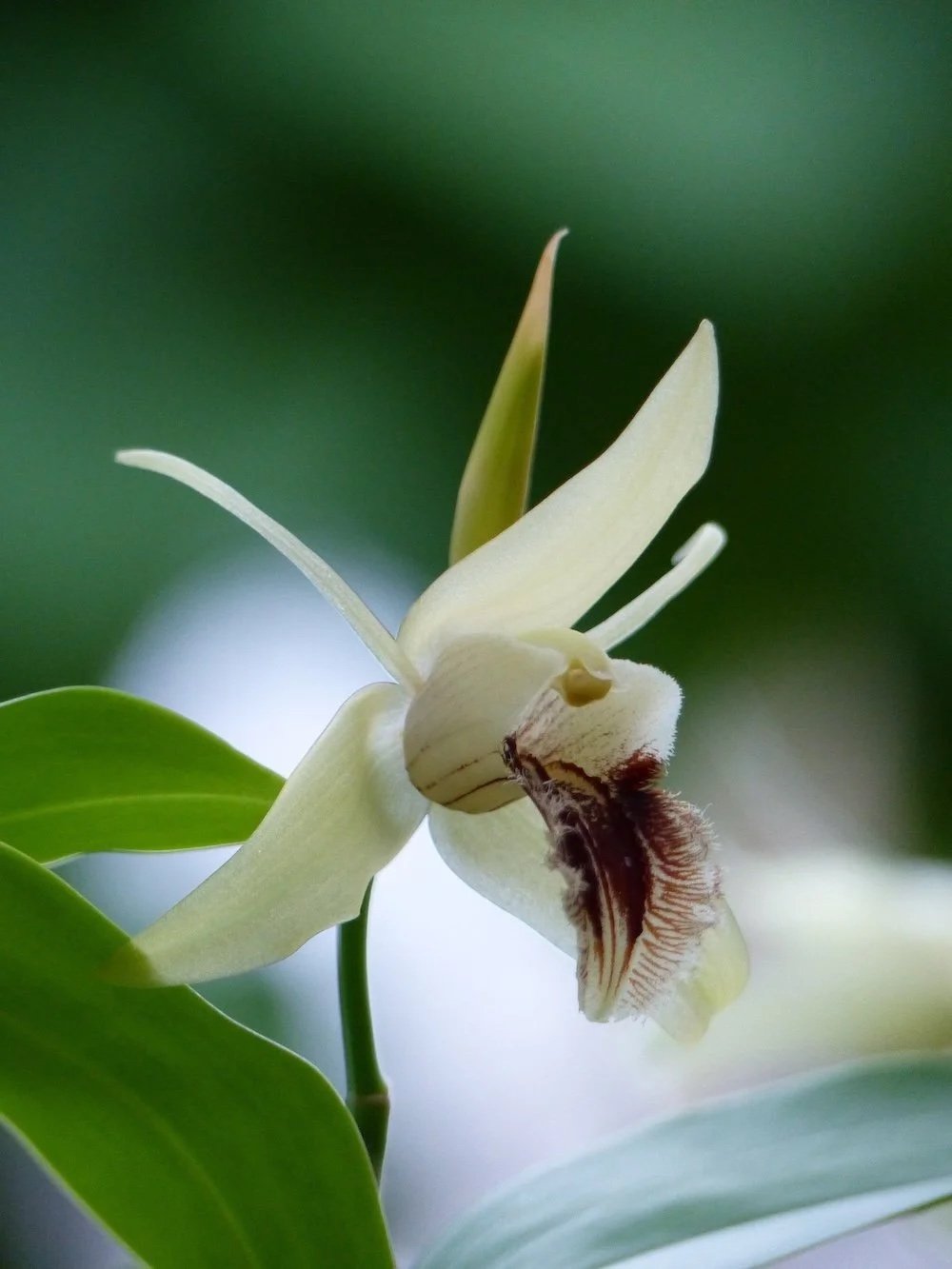
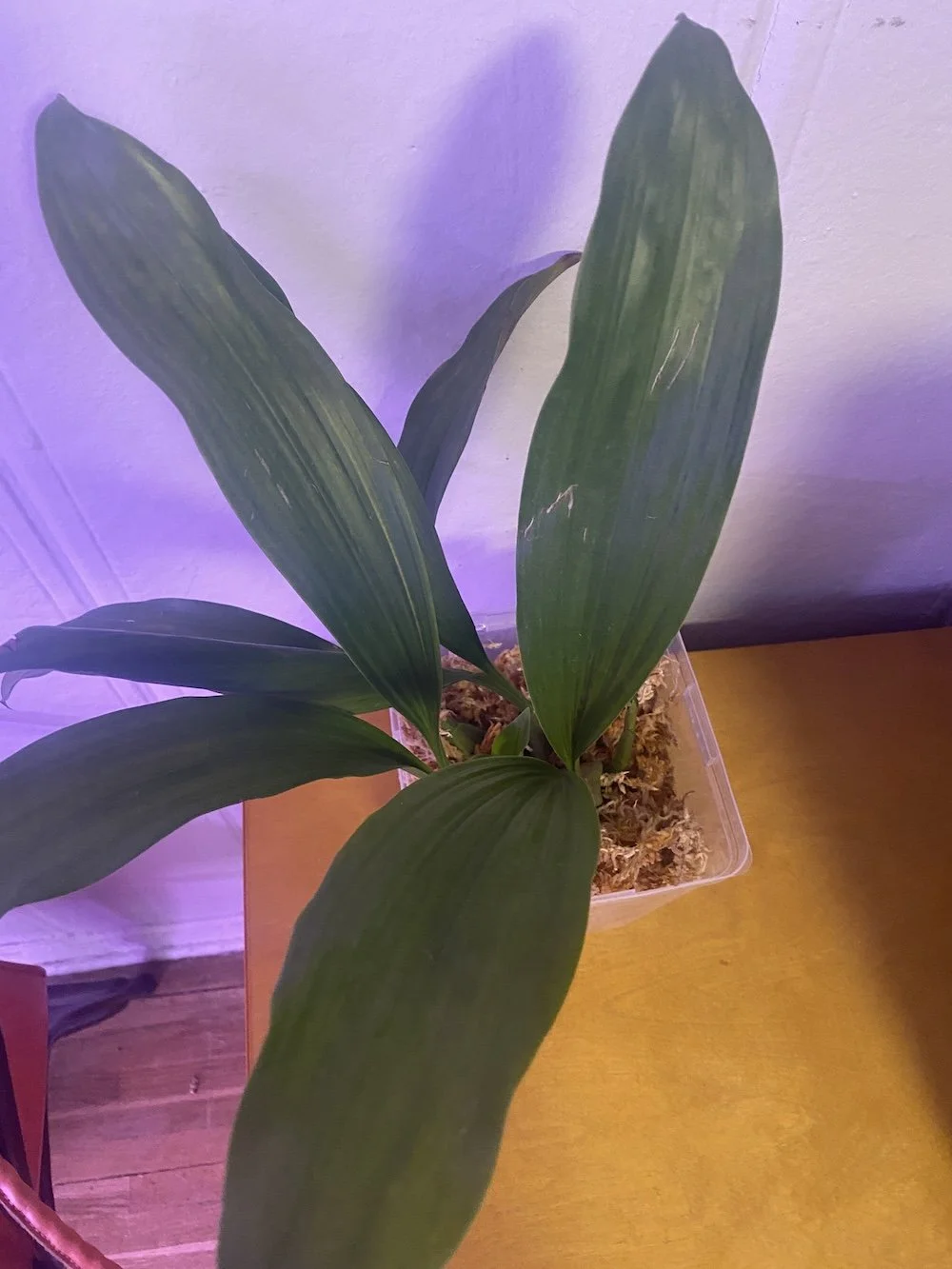
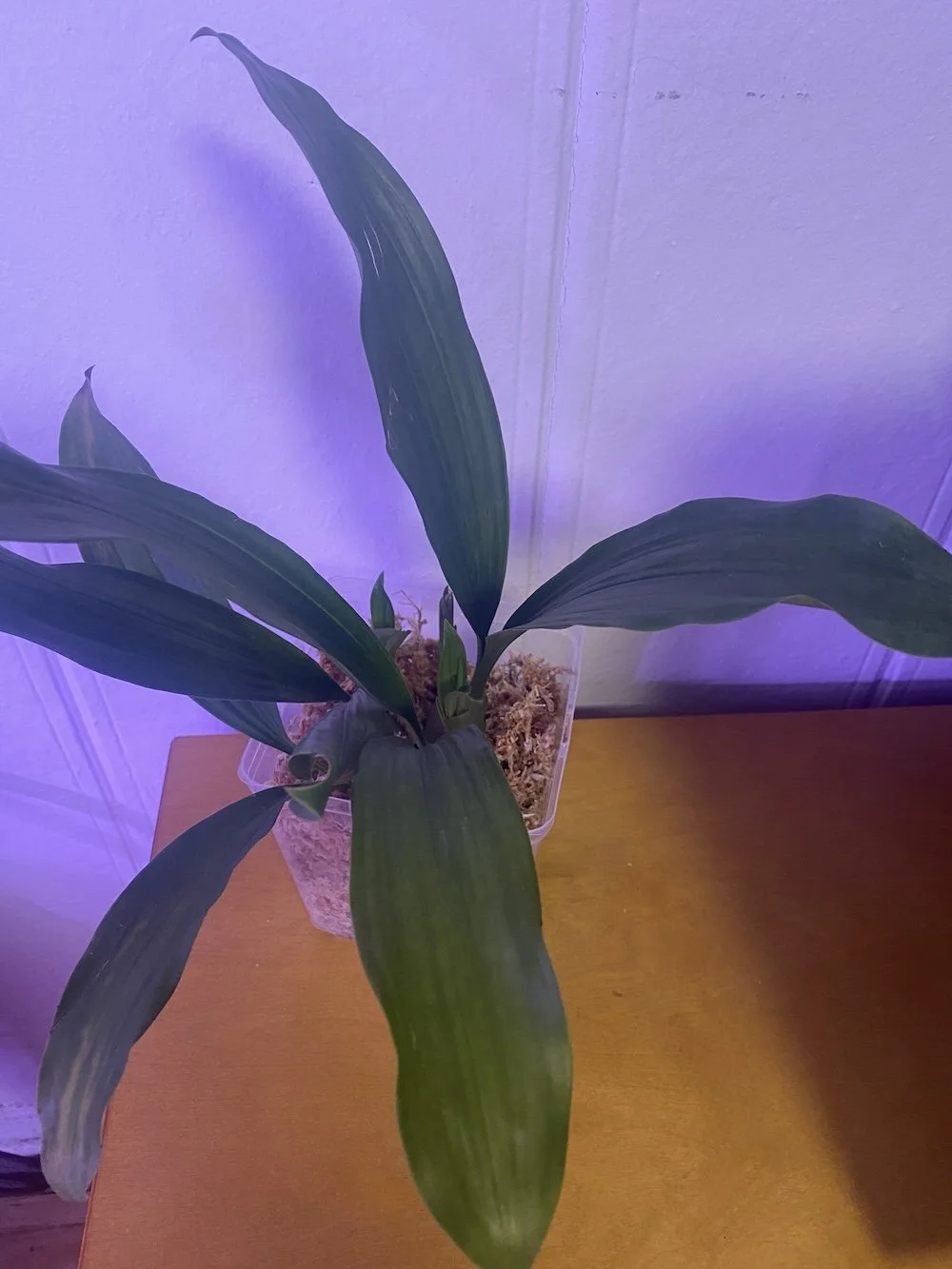
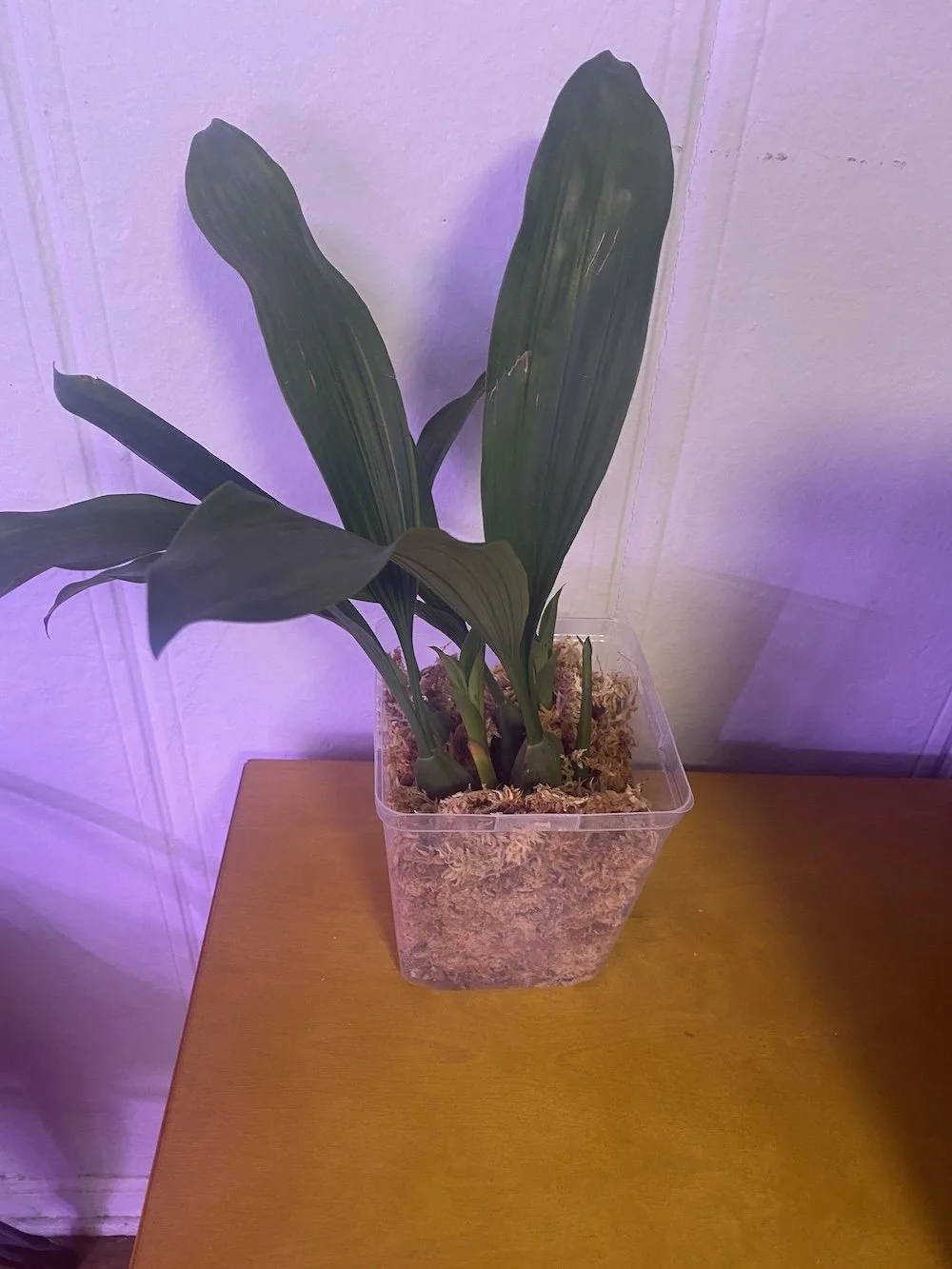
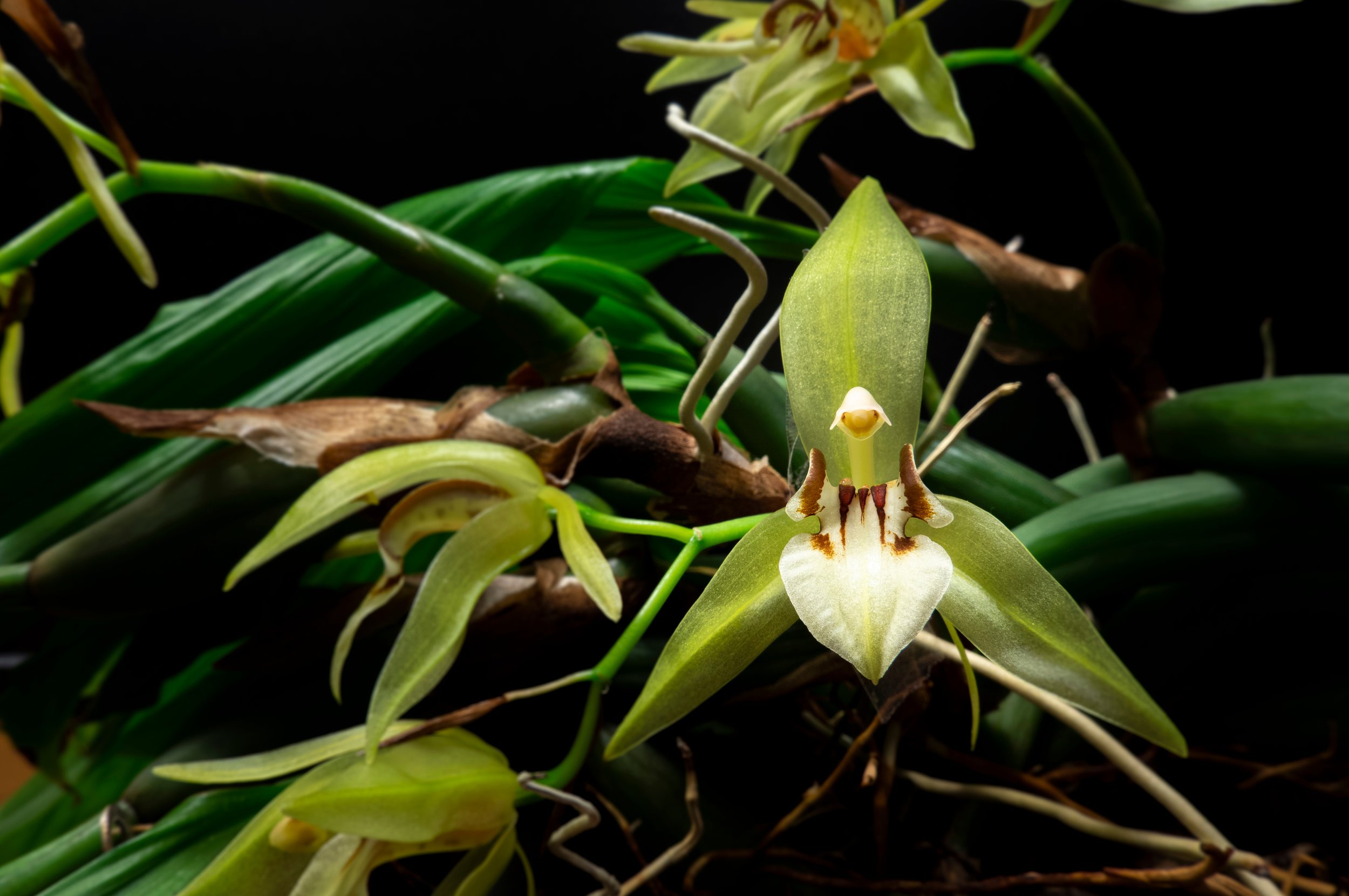
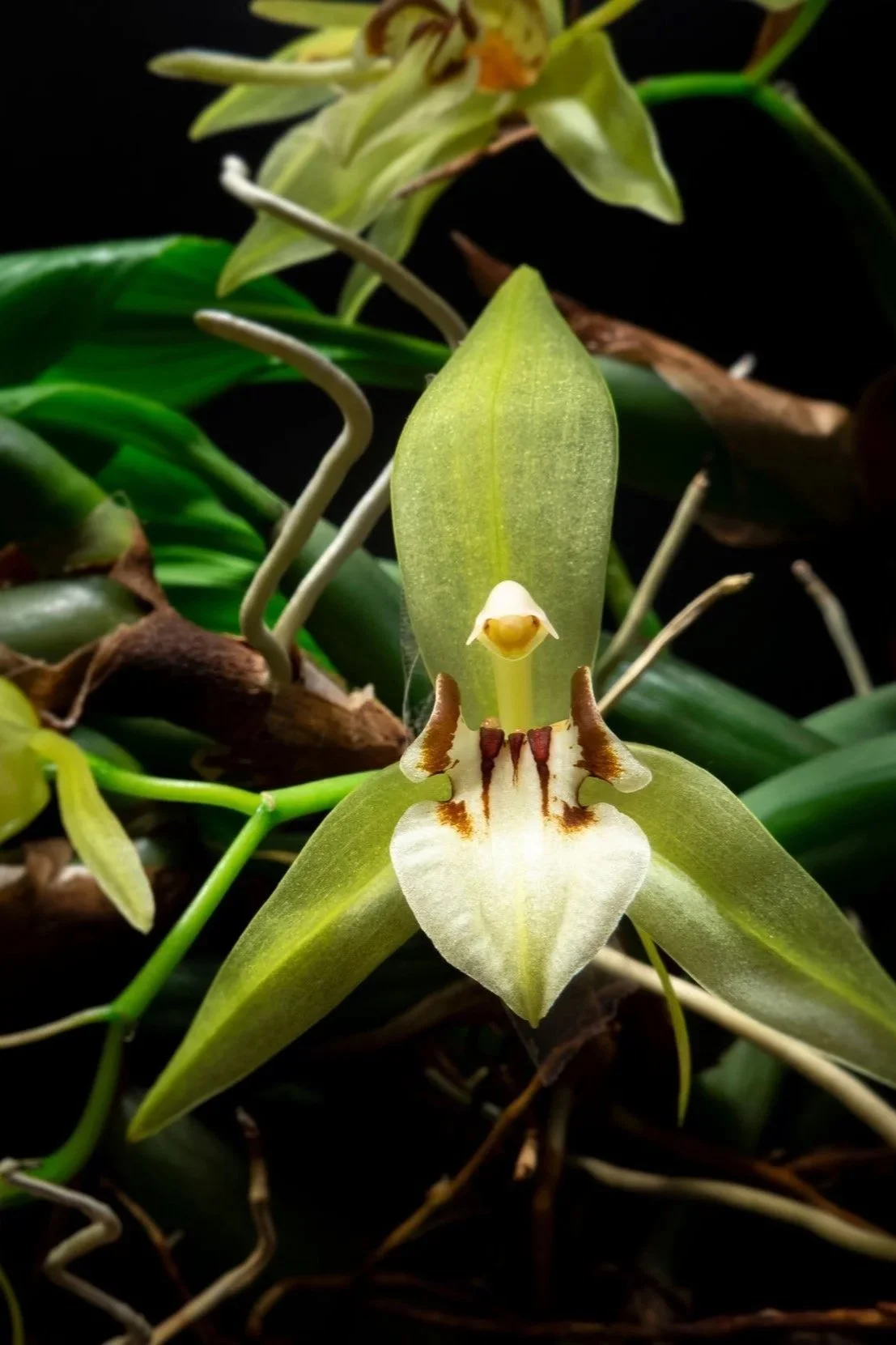
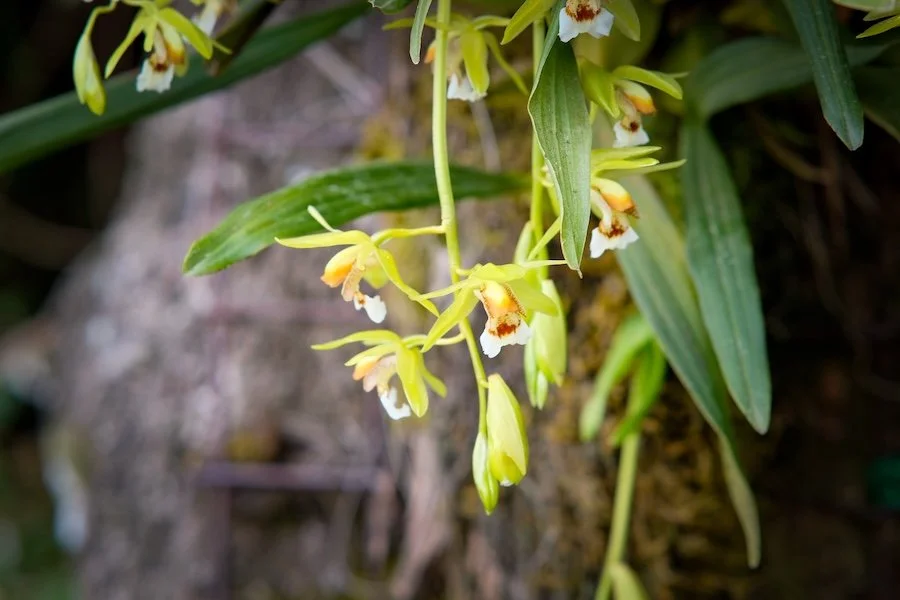
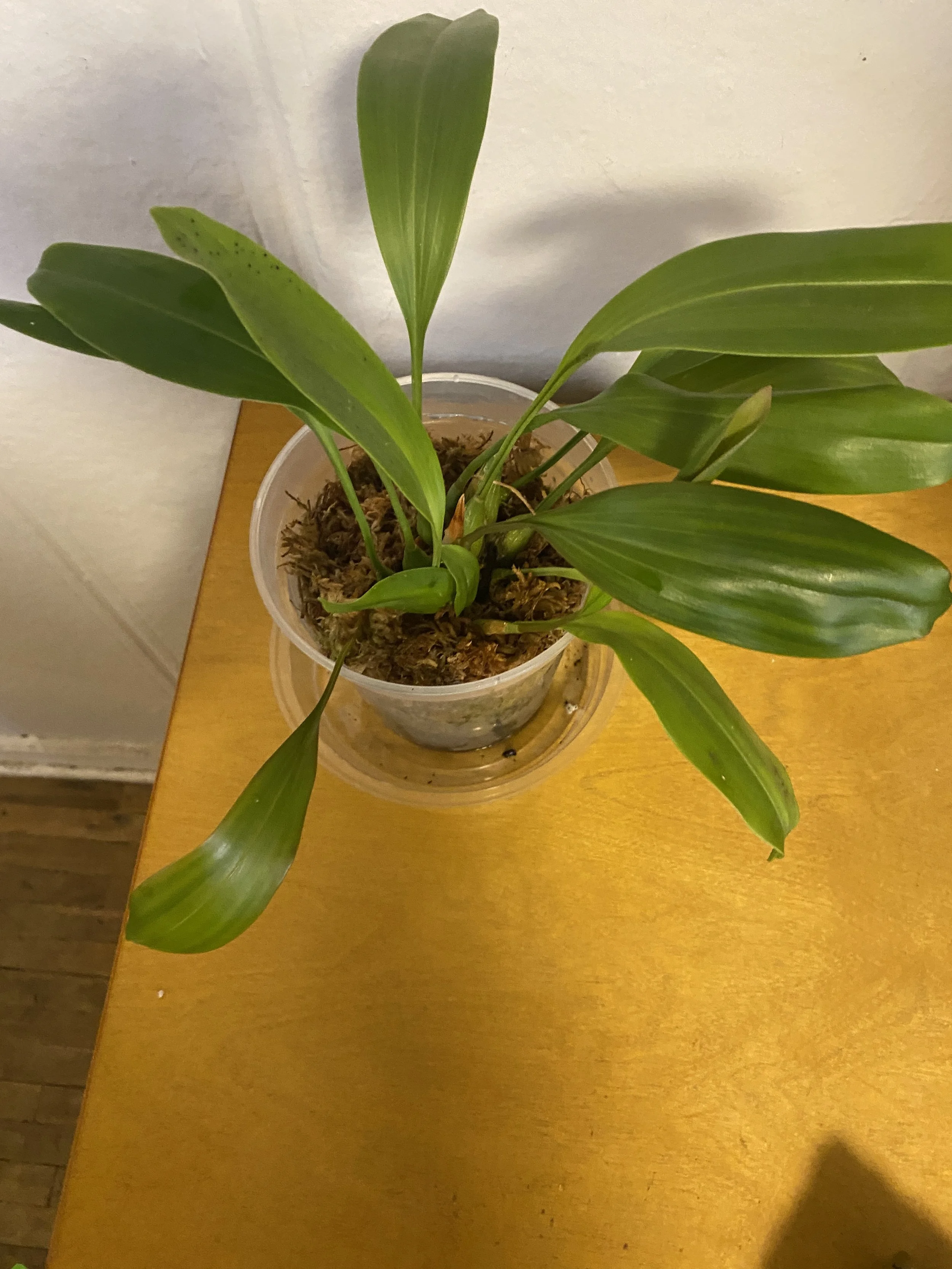
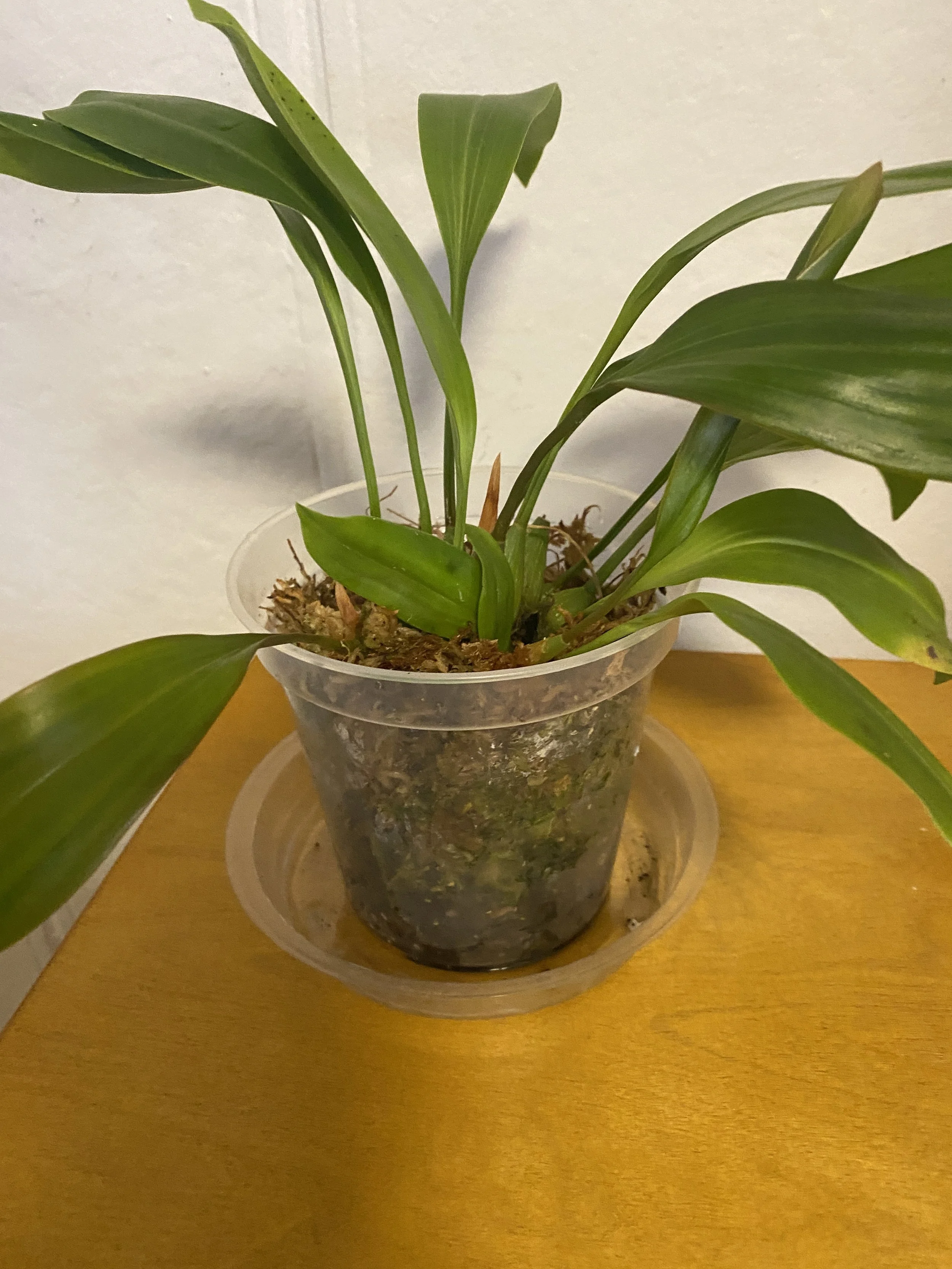
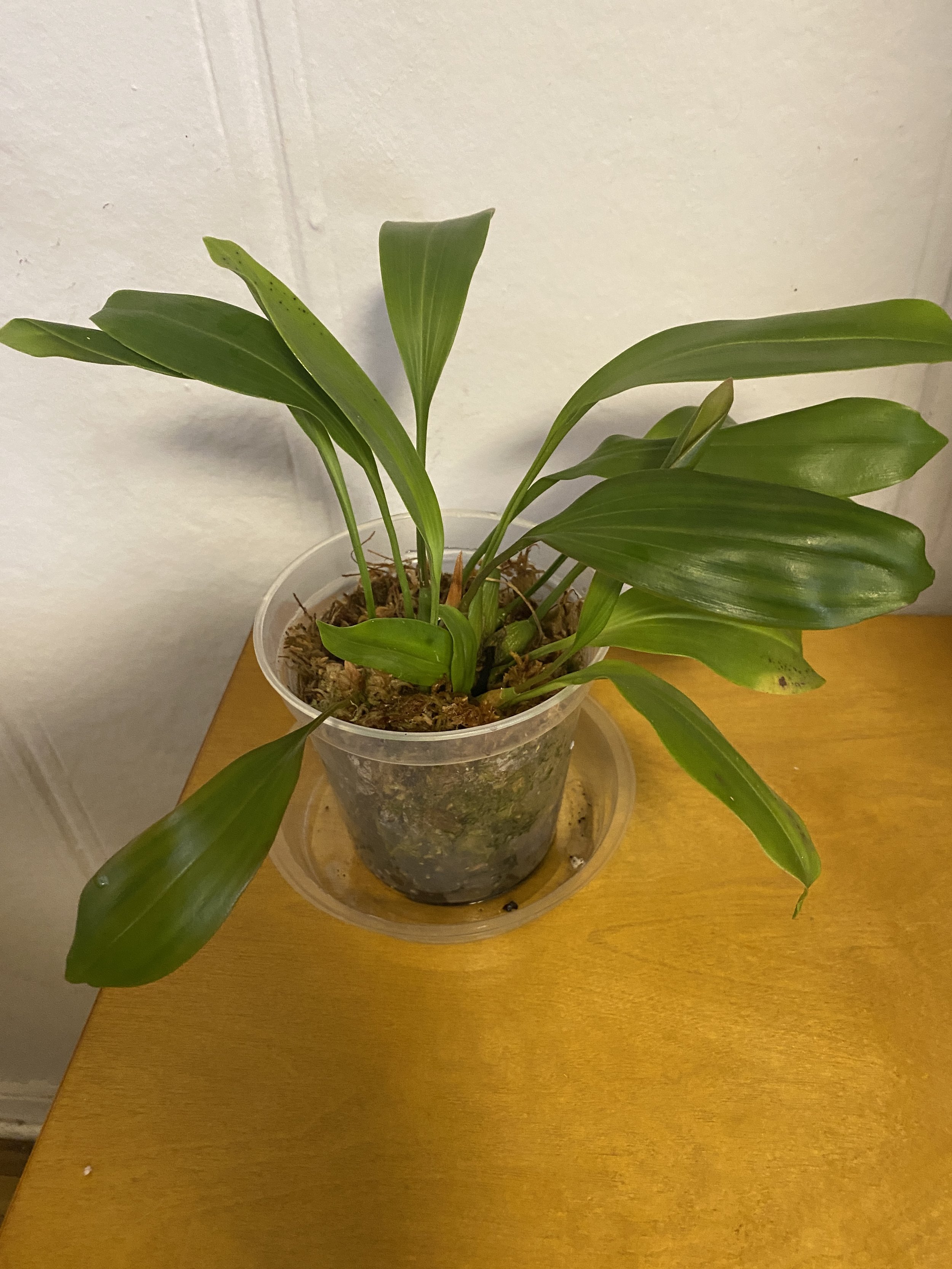
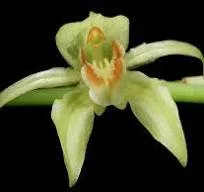
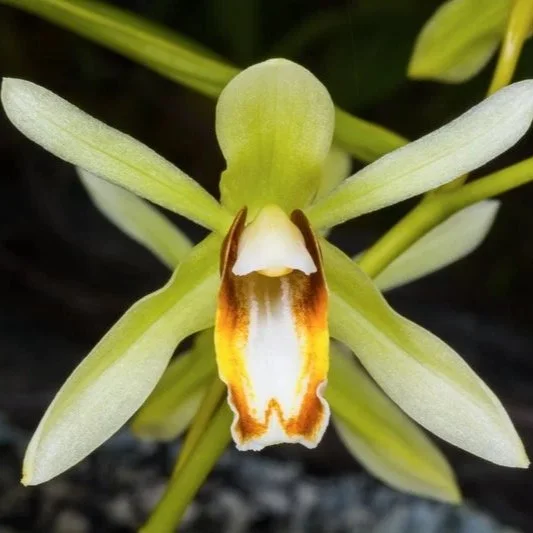
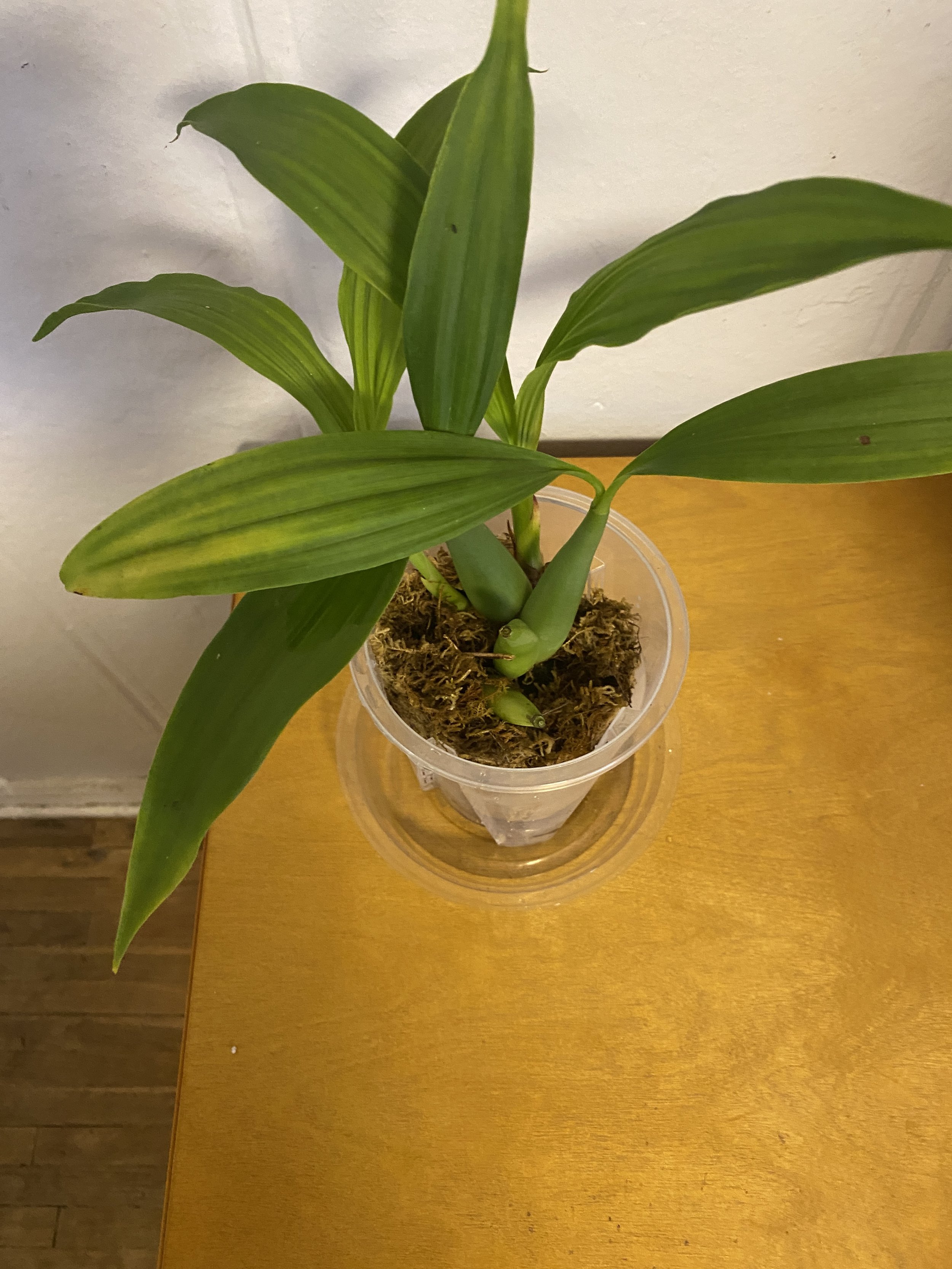
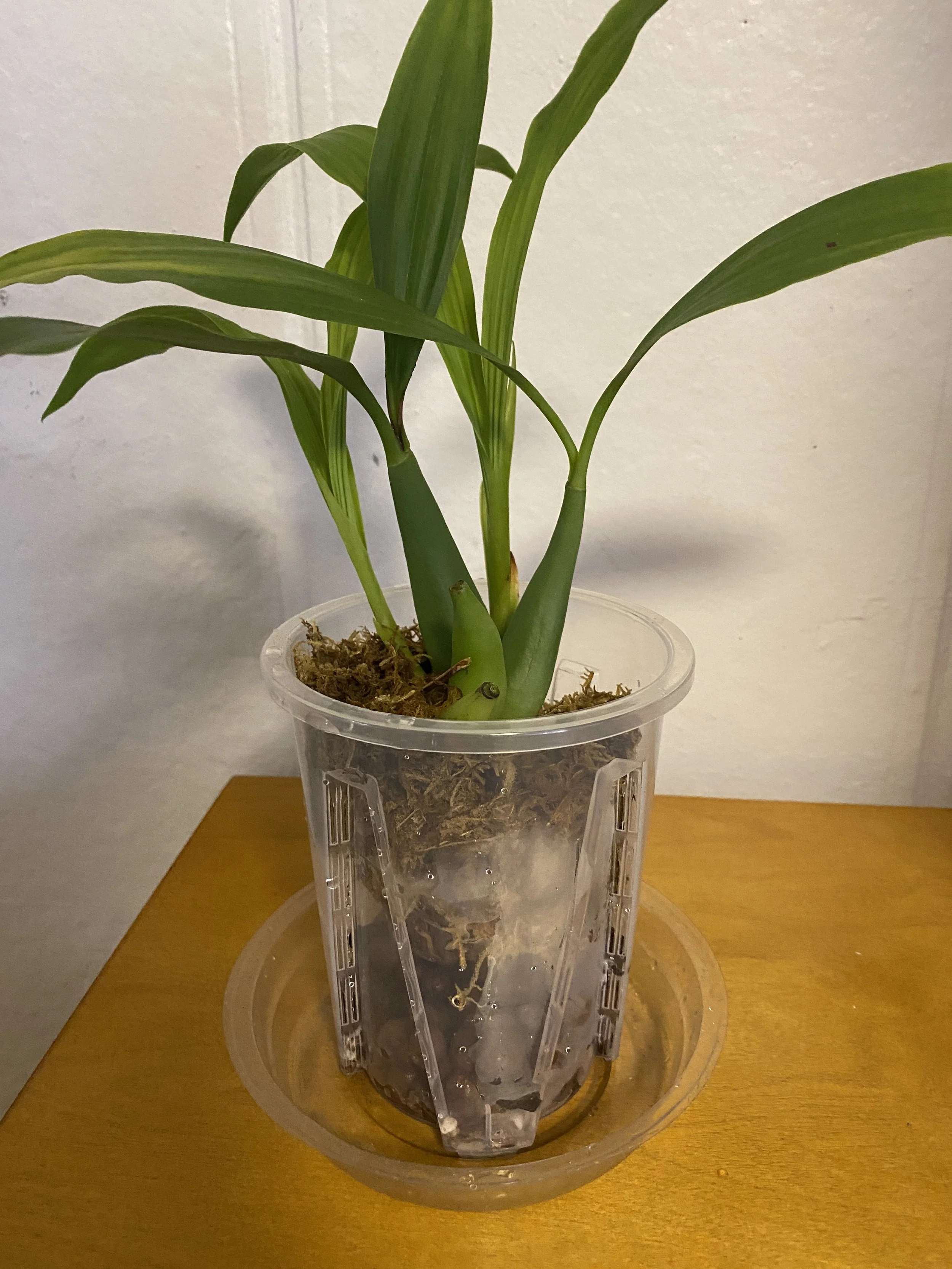
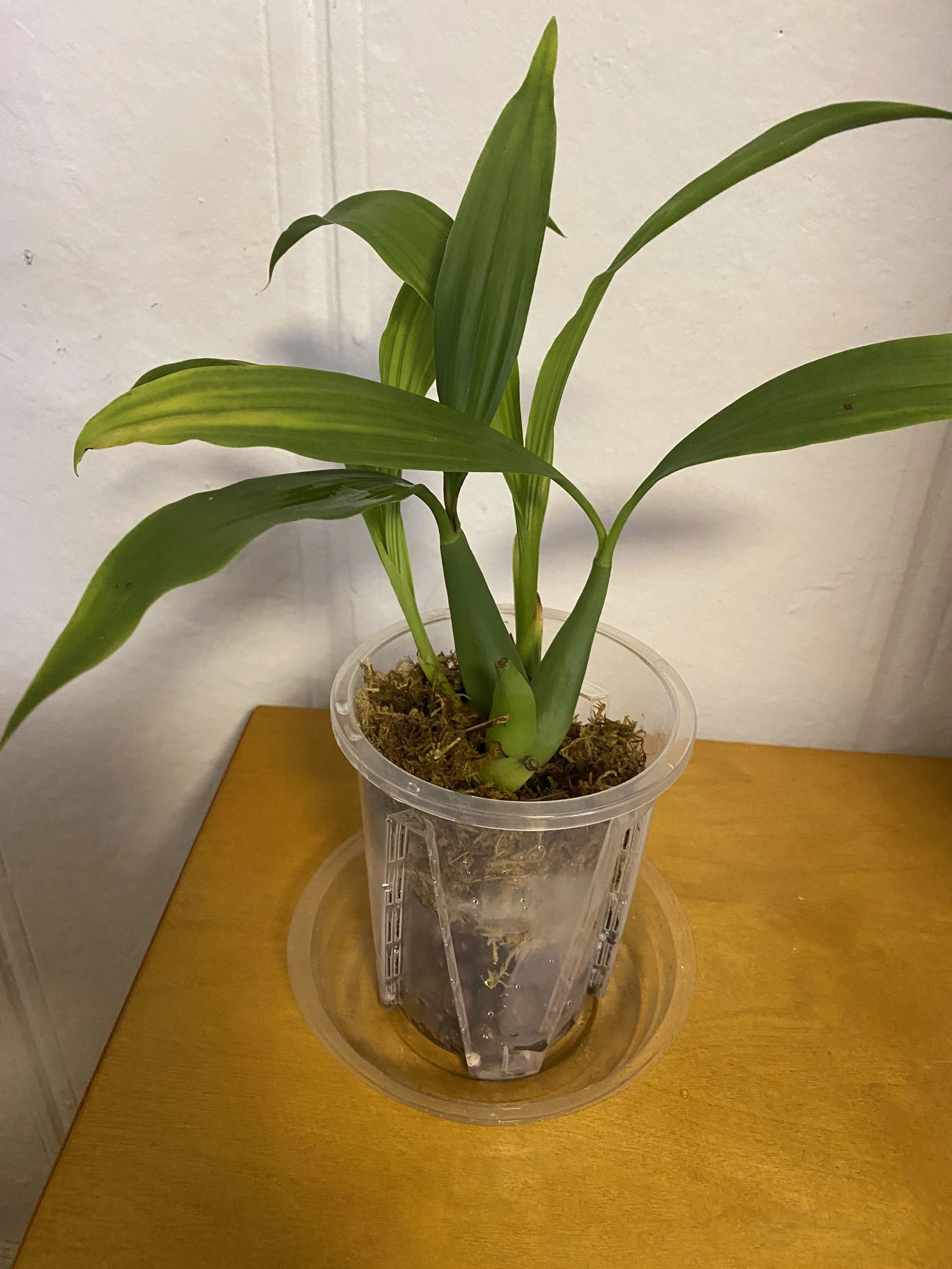
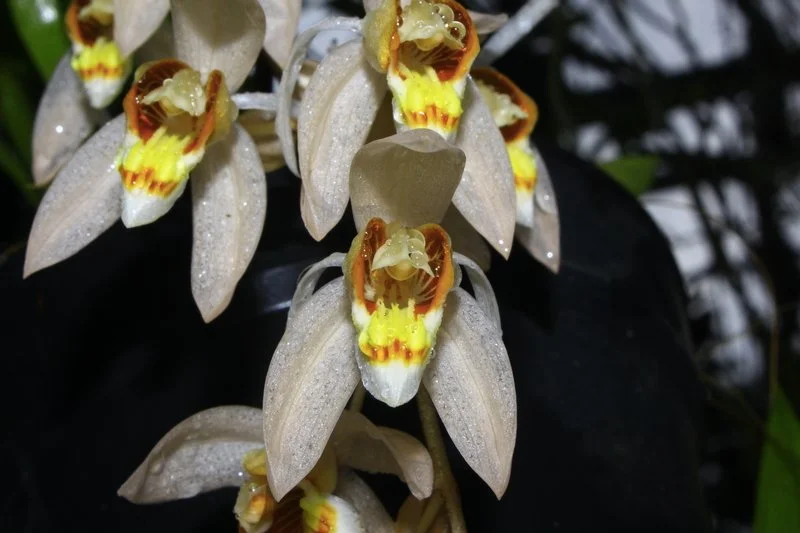
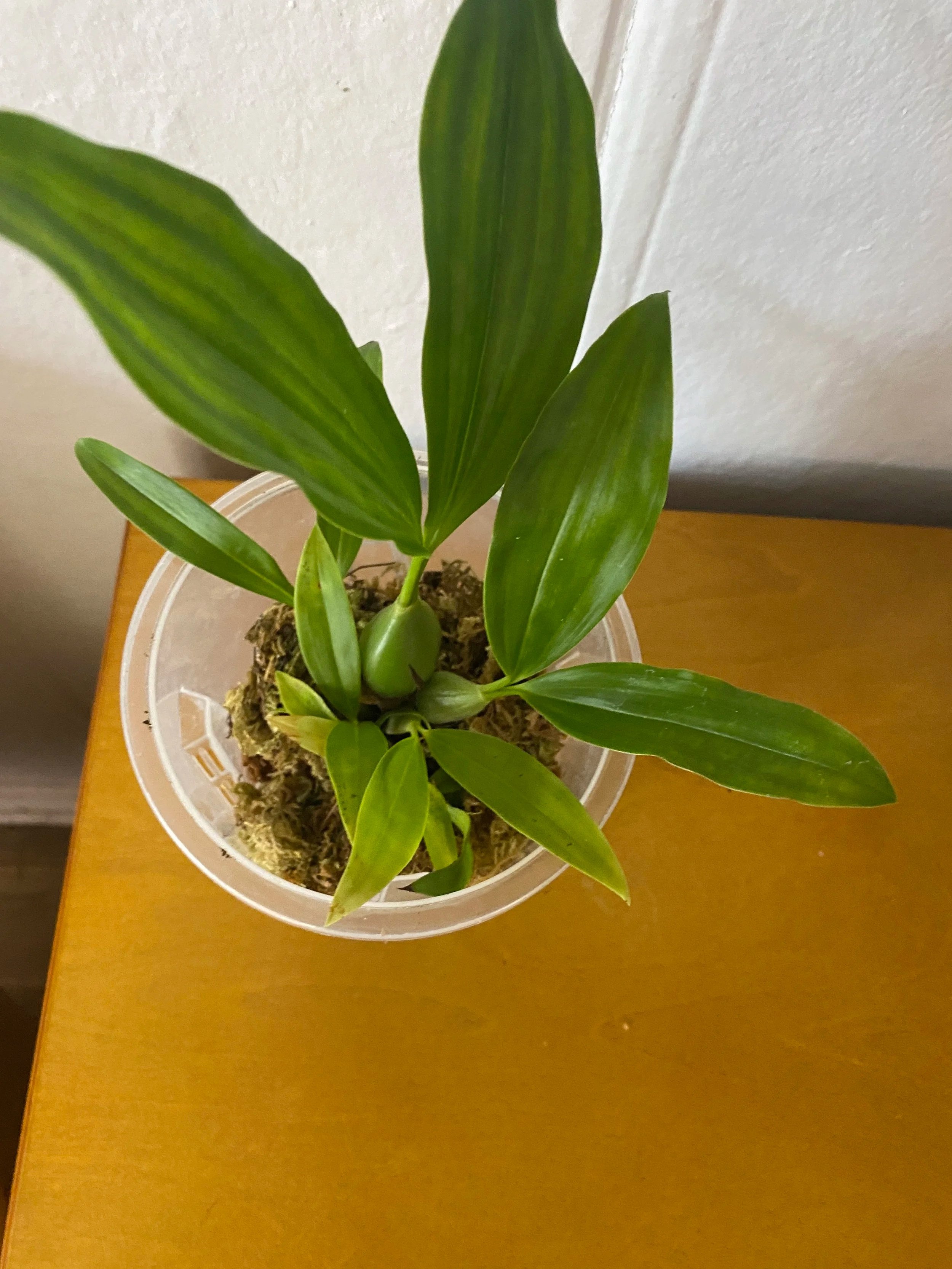
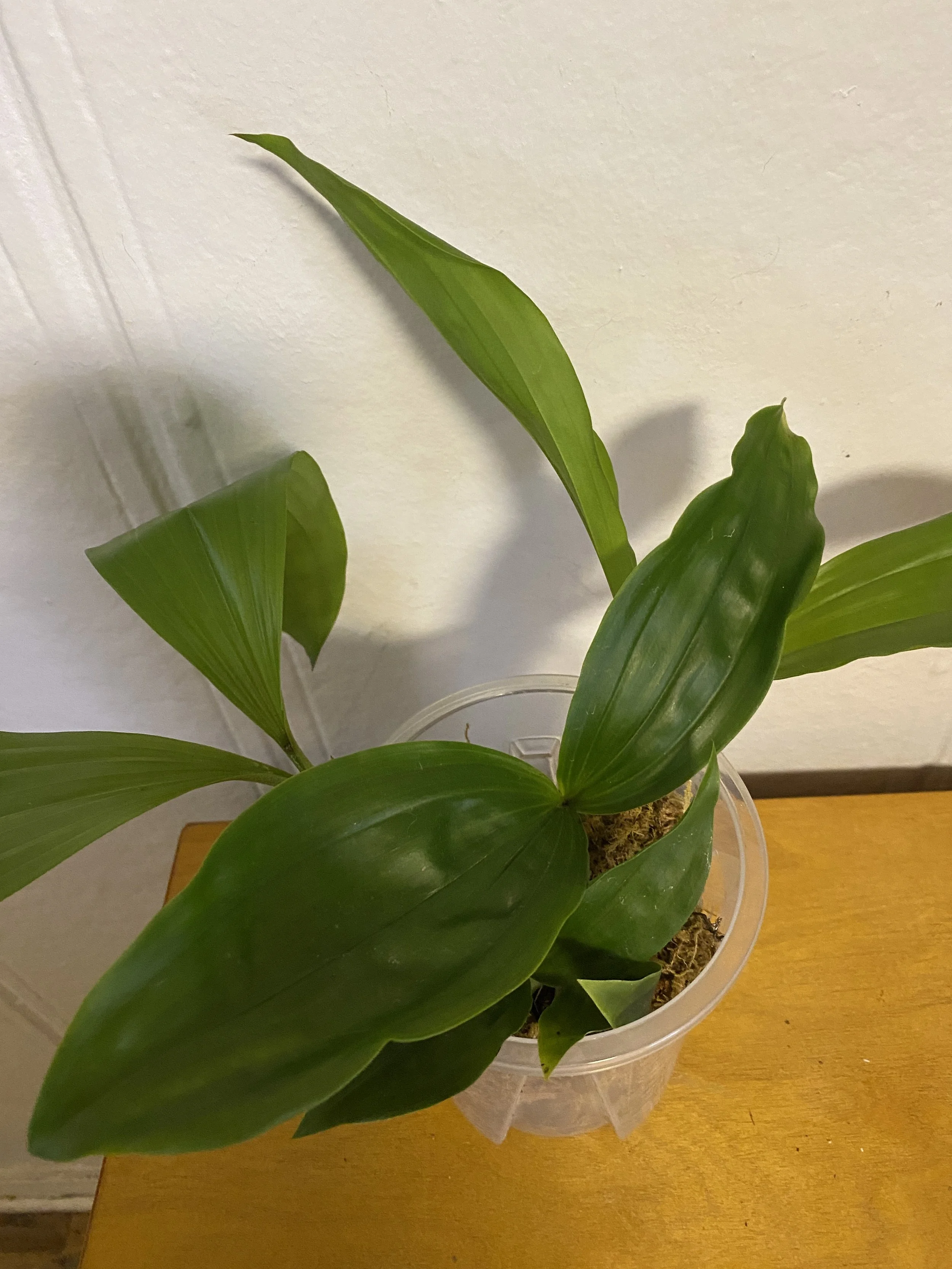
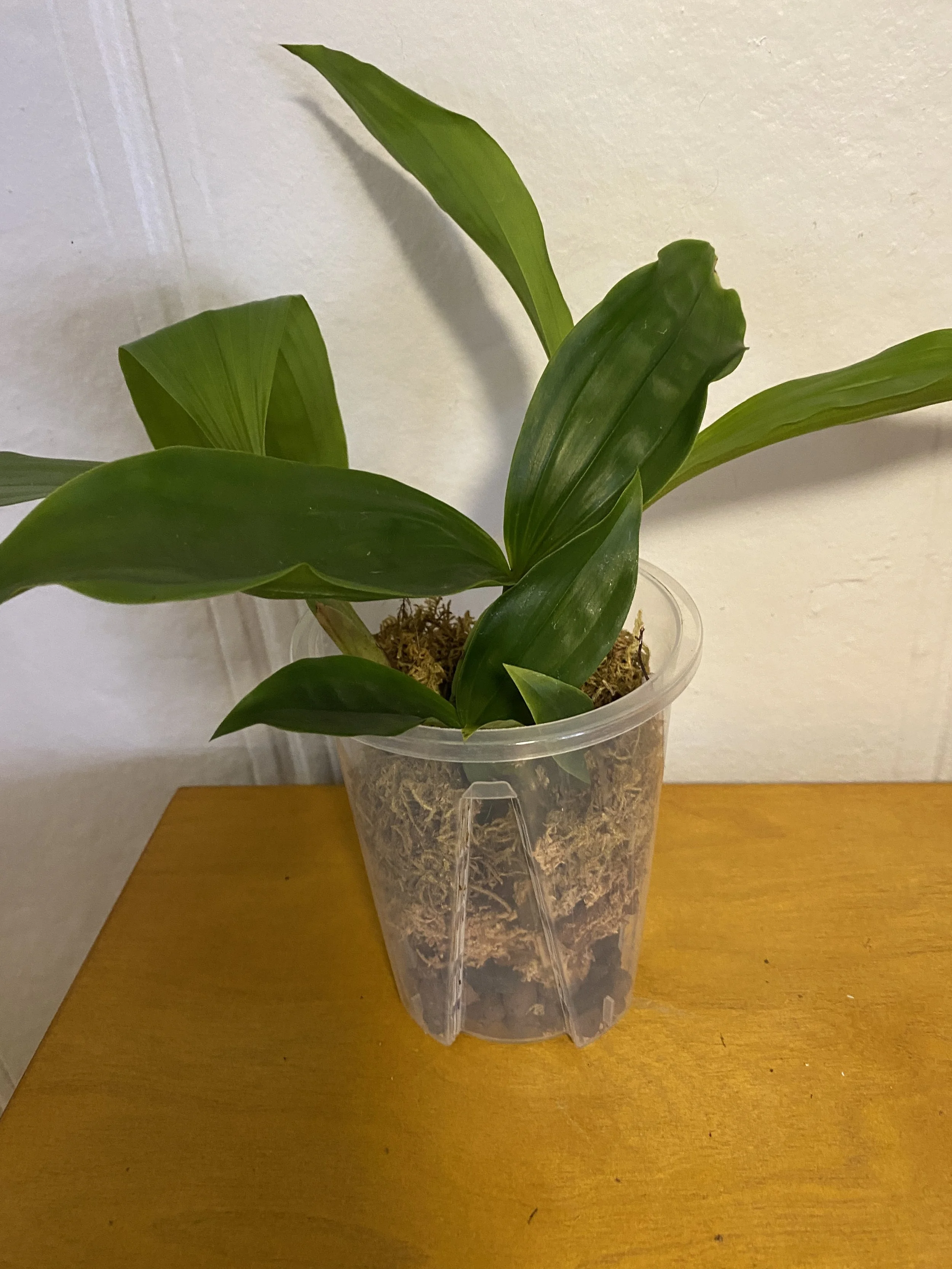
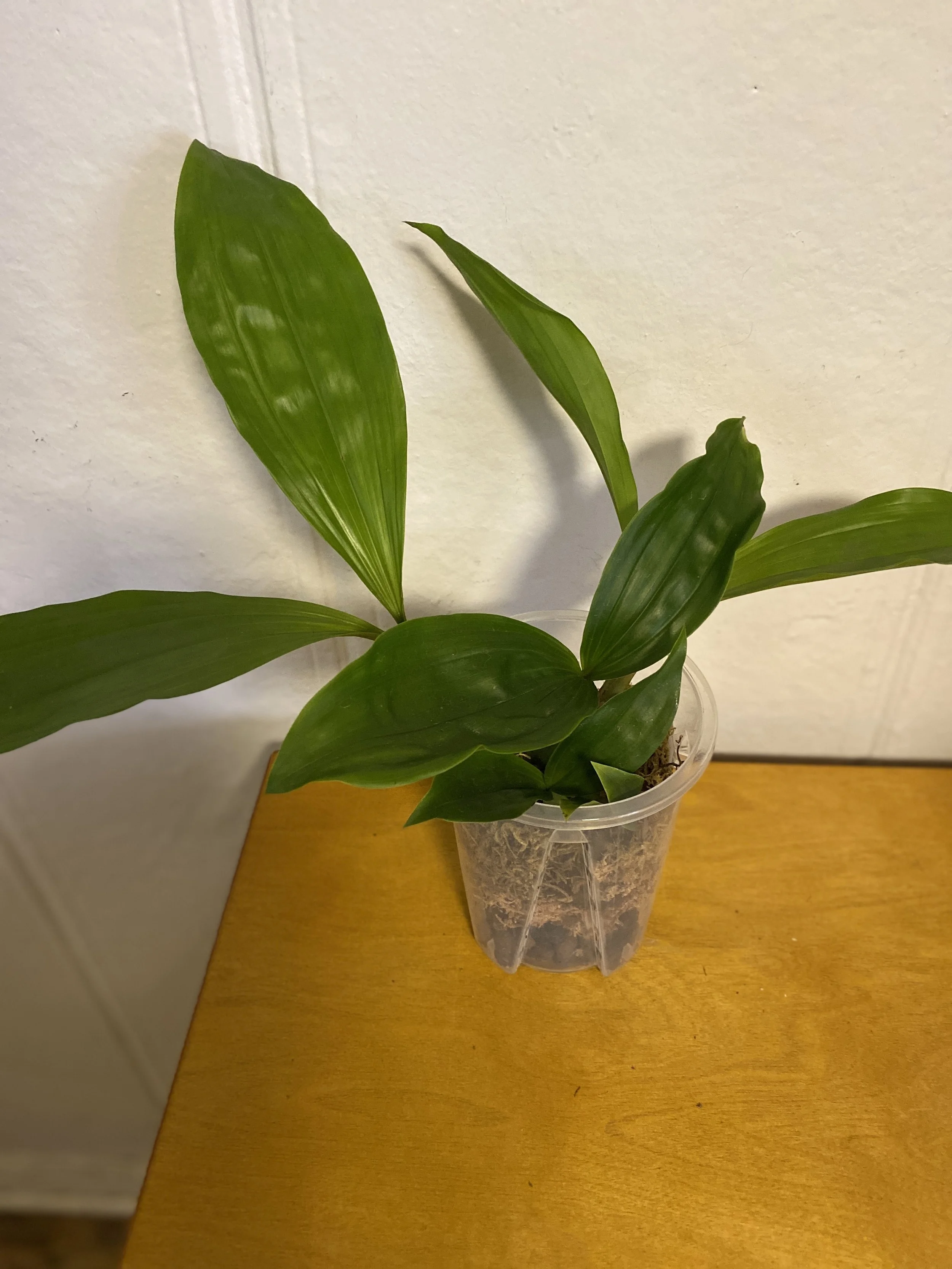
O'Dowd's Orchids Coelogyne Mooreana 'Westonbert' is a truly stunning example of elegance and refined grace within the Coelogyne family. Known for its delicate, creamy white petals beautifully accented with soft yellow tones and subtle brown markings, this exquisite orchid adds a touch of sophisticated beauty to any orchid collection. At O'Dowd's Orchids, we take great care in nurturing each plant meticulously, ensuring it reaches its fullest potential before shipping it safely to your doorstep, ready to brighten and enhance your home or garden space. Ideal for both seasoned growers and passionate enthusiasts alike, the Coelogyne Mooreana 'Westonbert' flourishes with gentle, attentive care and offers a consistently rewarding and delightful flowering experience. The leaves are 22 inches long, in a six inch pot.
Coelogyne mooreana ‘Westonbert’ — a graceful, fragrant Coelogyne prized for its waxy white blooms and subtle citrus scent — rewards attentive care with reliable blooms and long-lasting display.
Light: Bright, filtered light—similar to an east- or lightly shaded south-facing window. Avoid harsh midday sun; dappled shade or a north window with supplemental brightness is ideal.
Temperature and humidity: Intermediate to warm days (70–85°F) and cooler nights (55–65°F) encourage spike formation. Maintain 50–70% humidity; increase with humidity trays or a humidifier if indoor air is dry.
Watering: Keep evenly moist during active growth and flowering. Water thoroughly, letting excess drain, but never allow roots to sit in water. Reduce frequency slightly after flowering as growth slows, without allowing pseudobulbs to shrivel.
Potting medium and repotting: Use a free-draining mix—bark with some perlite/sphagnum or a fine-medium-sized orchid bark. Repot every 2–3 years (or when mix breaks down) in spring after flowering to refresh medium and prevent root rot.
Fertilizer: Feed lightly with a balanced orchid fertilizer (20-20-20 or similar) at quarter to half strength every 2–3 weeks during active growth. Reduce feeding during the cooler, slower period.
Air movement: Good gentle airflow prevents fungal and bacterial issues; a small fan on low is beneficial.
Pests and problems: Watch for mealybugs, scale, and spider mites. Brown or translucent pseudobulbs often indicate overwatering or stale media; yellowing leaves can signal root problems or nutrient imbalance.
Bloom care: Keep conditions stable and slightly cooler nights to promote spike development. Remove spent flower spikes at the base once finished; avoid cutting healthy canes.
O'Dowd's Orchids Coelogyne Mooreana 'Westonbert' is a truly stunning example of elegance and refined grace within the Coelogyne family. Known for its delicate, creamy white petals beautifully accented with soft yellow tones and subtle brown markings, this exquisite orchid adds a touch of sophisticated beauty to any orchid collection. At O'Dowd's Orchids, we take great care in nurturing each plant meticulously, ensuring it reaches its fullest potential before shipping it safely to your doorstep, ready to brighten and enhance your home or garden space. Ideal for both seasoned growers and passionate enthusiasts alike, the Coelogyne Mooreana 'Westonbert' flourishes with gentle, attentive care and offers a consistently rewarding and delightful flowering experience. The leaves are 22 inches long, in a six inch pot.
Coelogyne mooreana ‘Westonbert’ — a graceful, fragrant Coelogyne prized for its waxy white blooms and subtle citrus scent — rewards attentive care with reliable blooms and long-lasting display.
Light: Bright, filtered light—similar to an east- or lightly shaded south-facing window. Avoid harsh midday sun; dappled shade or a north window with supplemental brightness is ideal.
Temperature and humidity: Intermediate to warm days (70–85°F) and cooler nights (55–65°F) encourage spike formation. Maintain 50–70% humidity; increase with humidity trays or a humidifier if indoor air is dry.
Watering: Keep evenly moist during active growth and flowering. Water thoroughly, letting excess drain, but never allow roots to sit in water. Reduce frequency slightly after flowering as growth slows, without allowing pseudobulbs to shrivel.
Potting medium and repotting: Use a free-draining mix—bark with some perlite/sphagnum or a fine-medium-sized orchid bark. Repot every 2–3 years (or when mix breaks down) in spring after flowering to refresh medium and prevent root rot.
Fertilizer: Feed lightly with a balanced orchid fertilizer (20-20-20 or similar) at quarter to half strength every 2–3 weeks during active growth. Reduce feeding during the cooler, slower period.
Air movement: Good gentle airflow prevents fungal and bacterial issues; a small fan on low is beneficial.
Pests and problems: Watch for mealybugs, scale, and spider mites. Brown or translucent pseudobulbs often indicate overwatering or stale media; yellowing leaves can signal root problems or nutrient imbalance.
Bloom care: Keep conditions stable and slightly cooler nights to promote spike development. Remove spent flower spikes at the base once finished; avoid cutting healthy canes.
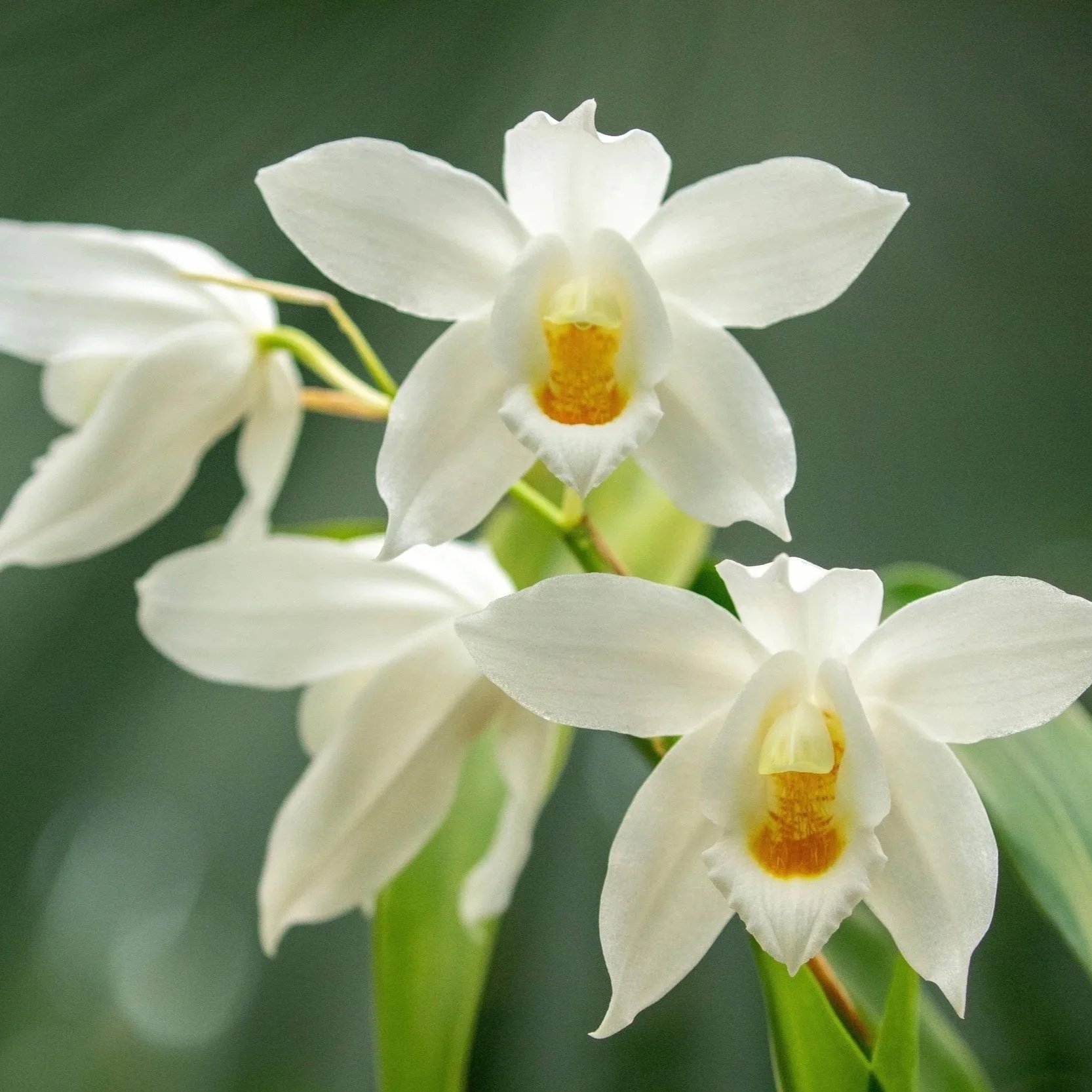 Image 1 of 4
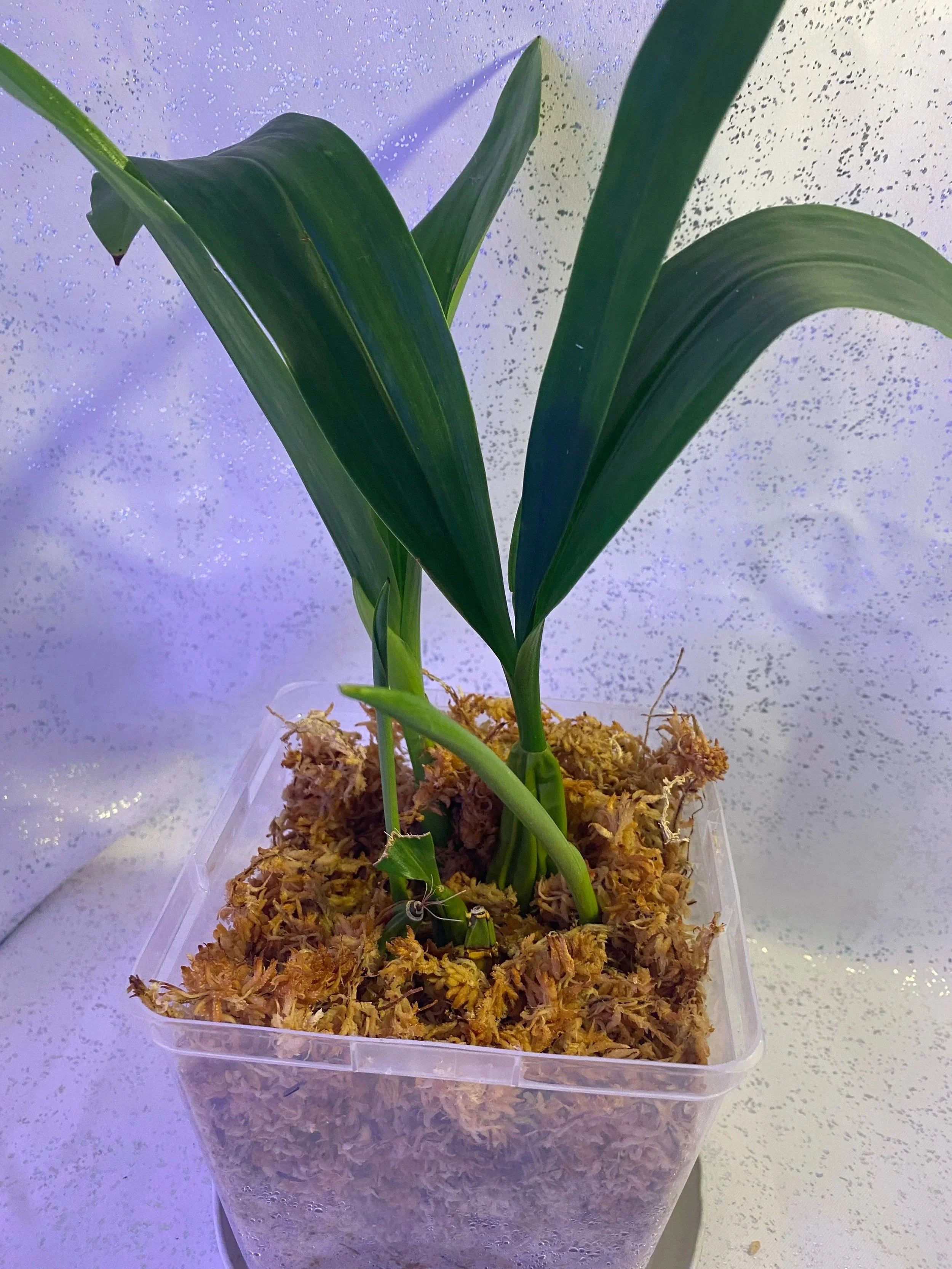 Image 2 of 4
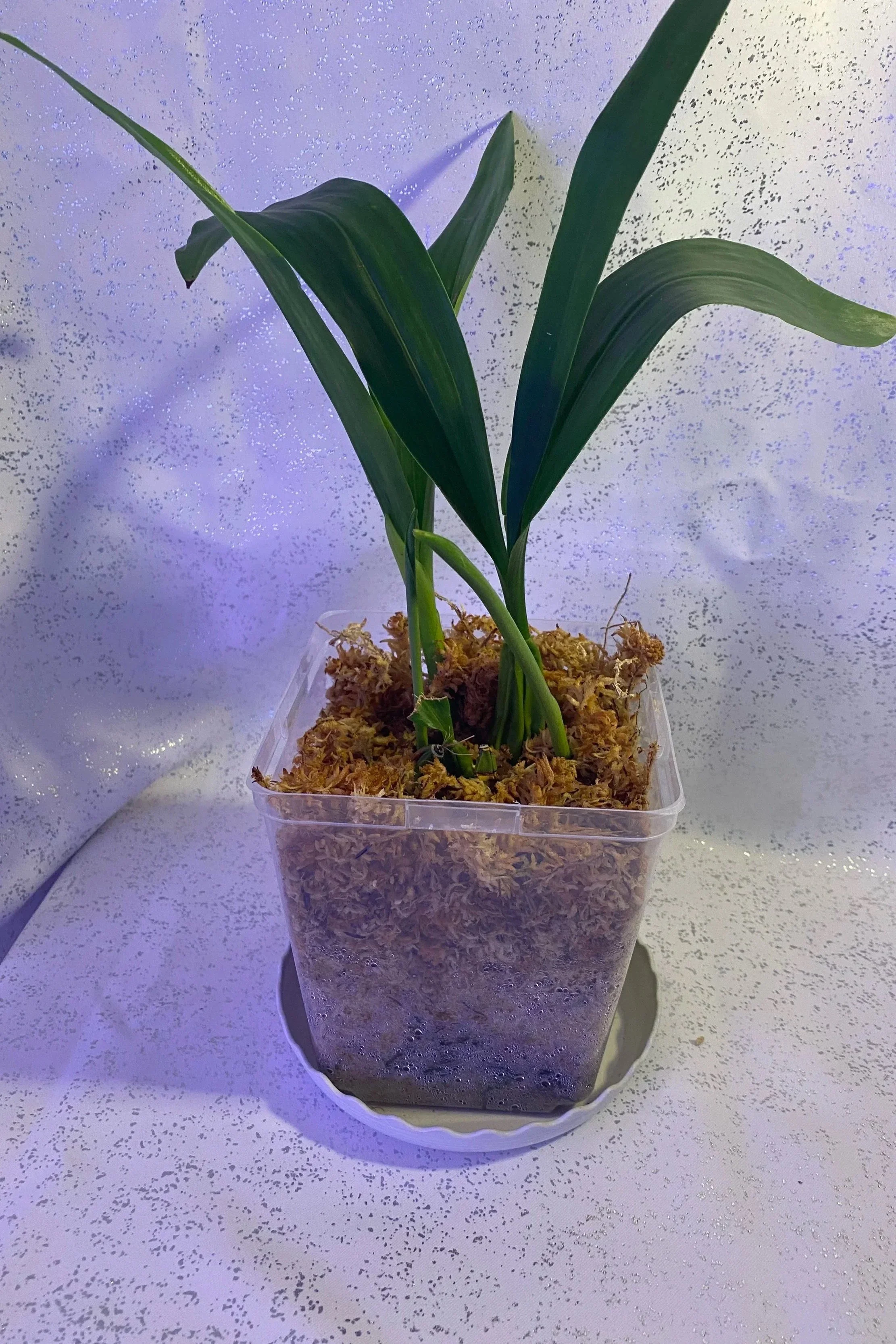 Image 3 of 4
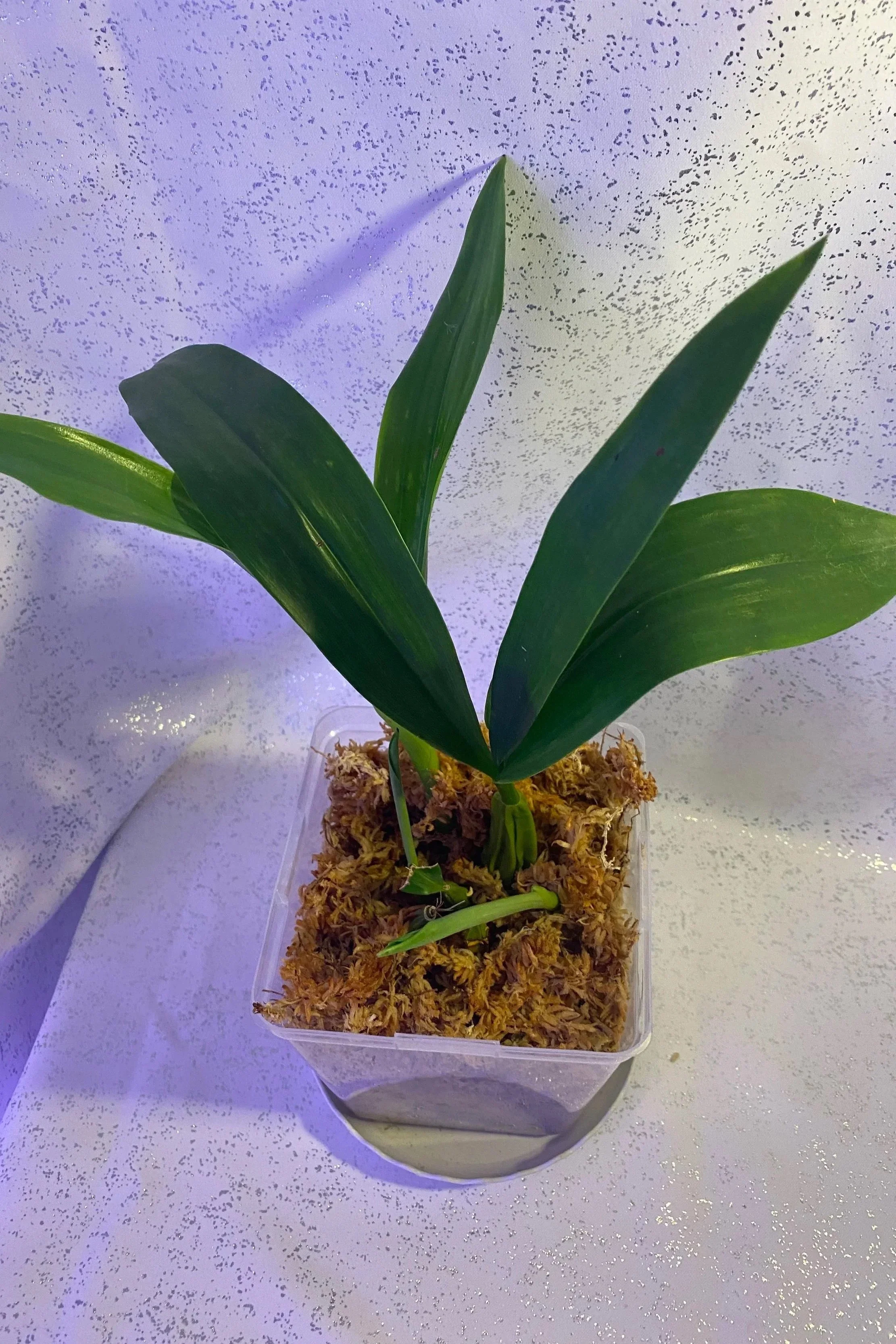 Image 4 of 4