 Image 1 of 4
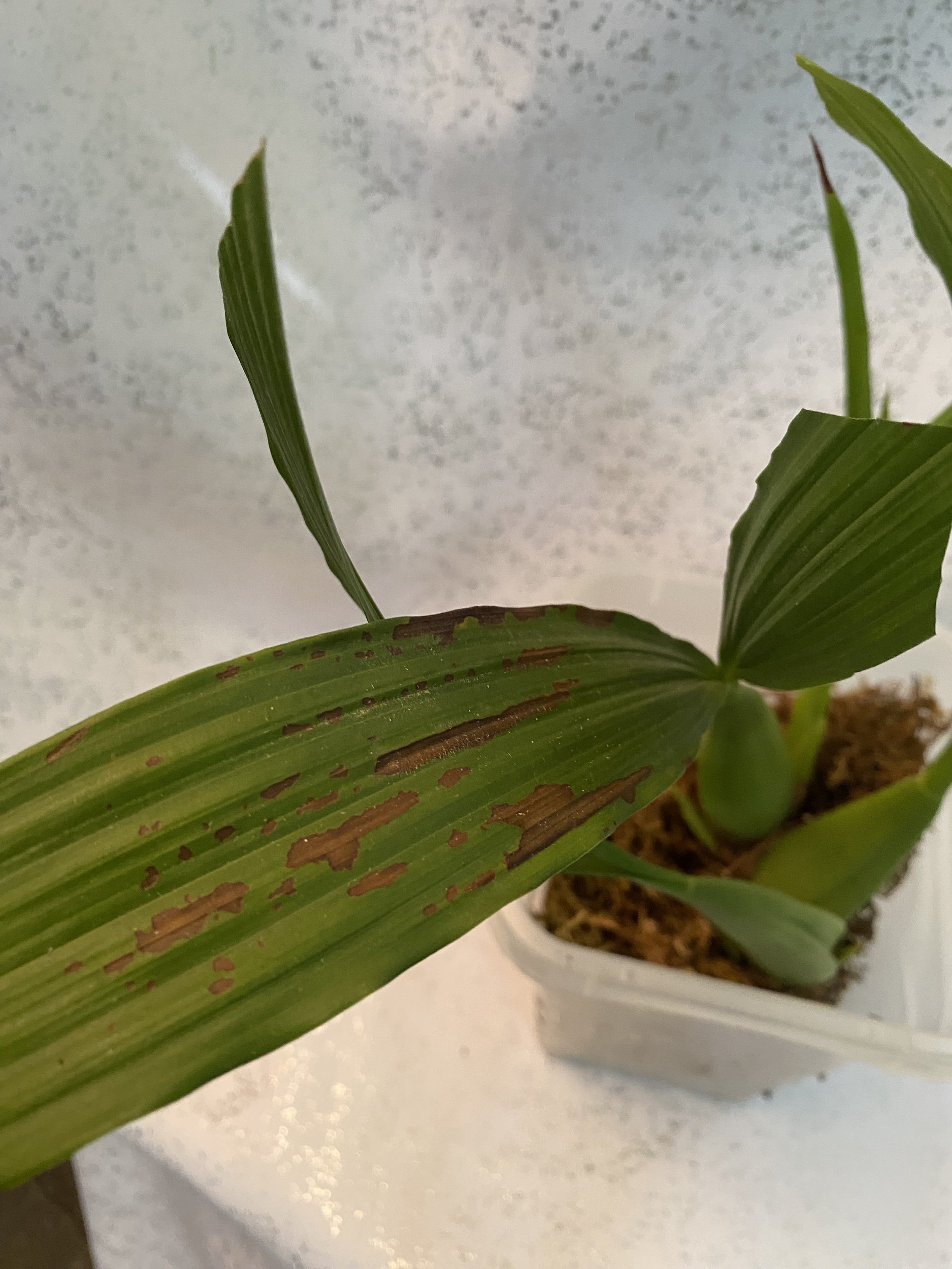 Image 2 of 4
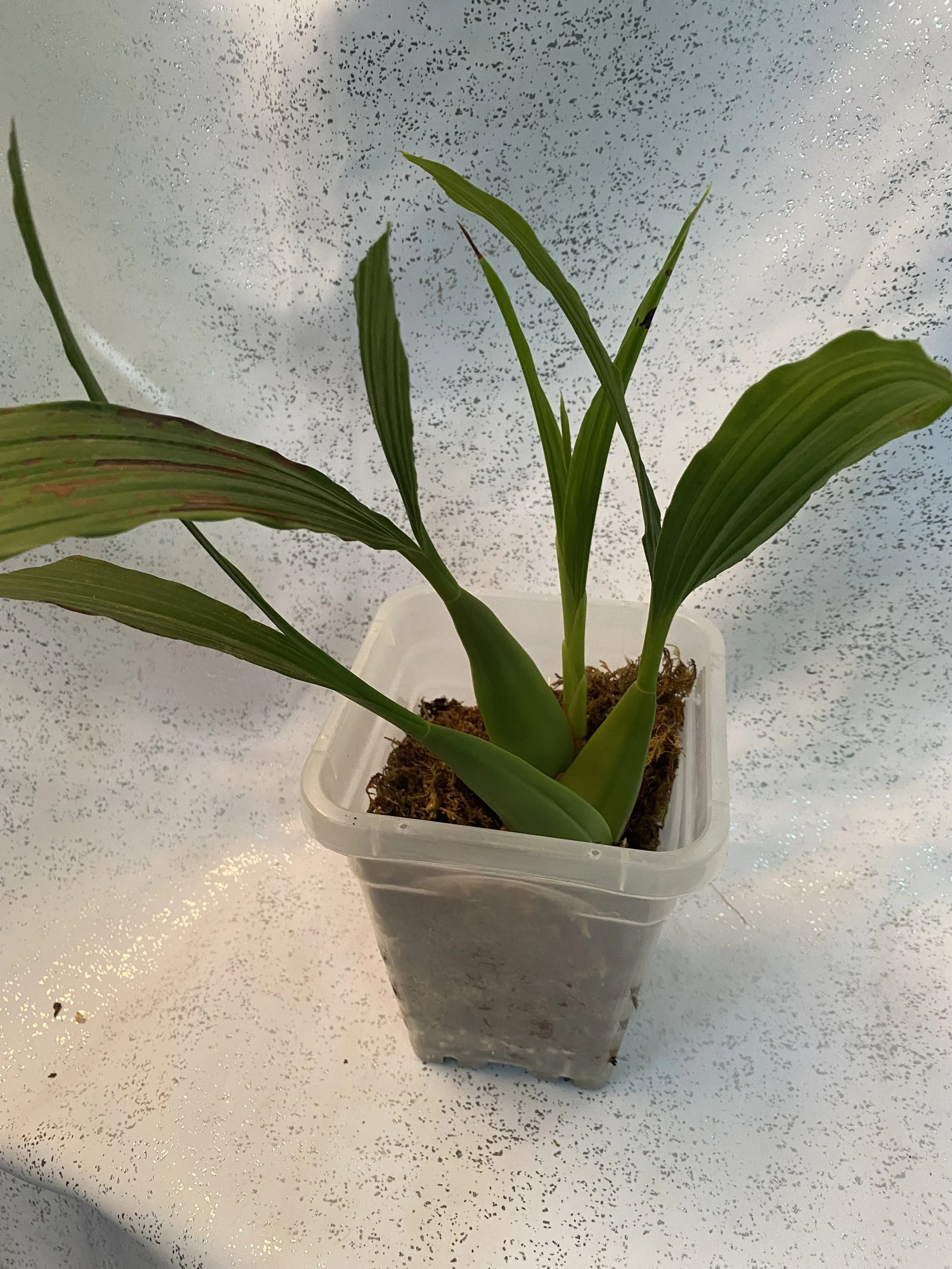 Image 3 of 4
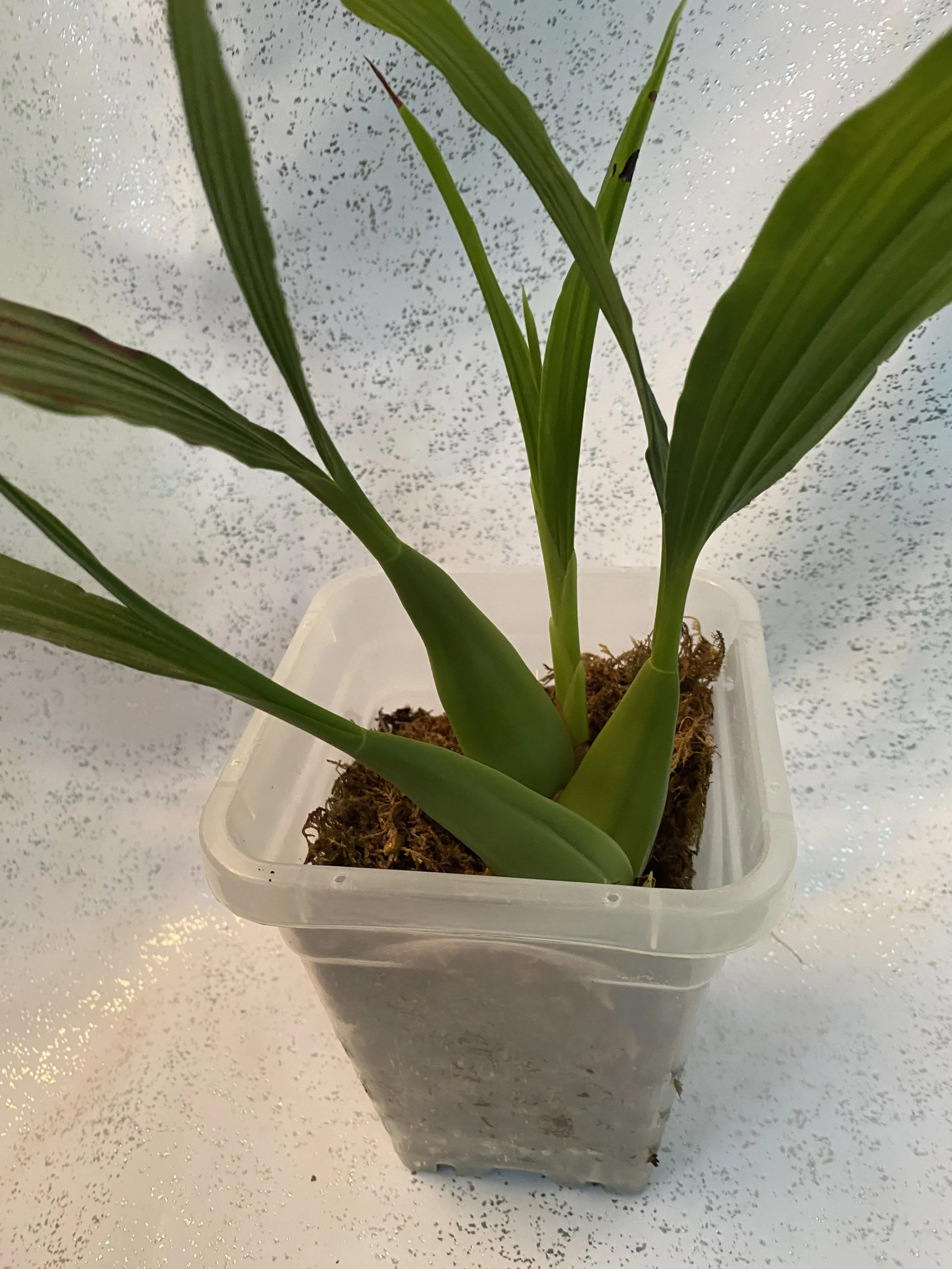 Image 4 of 4
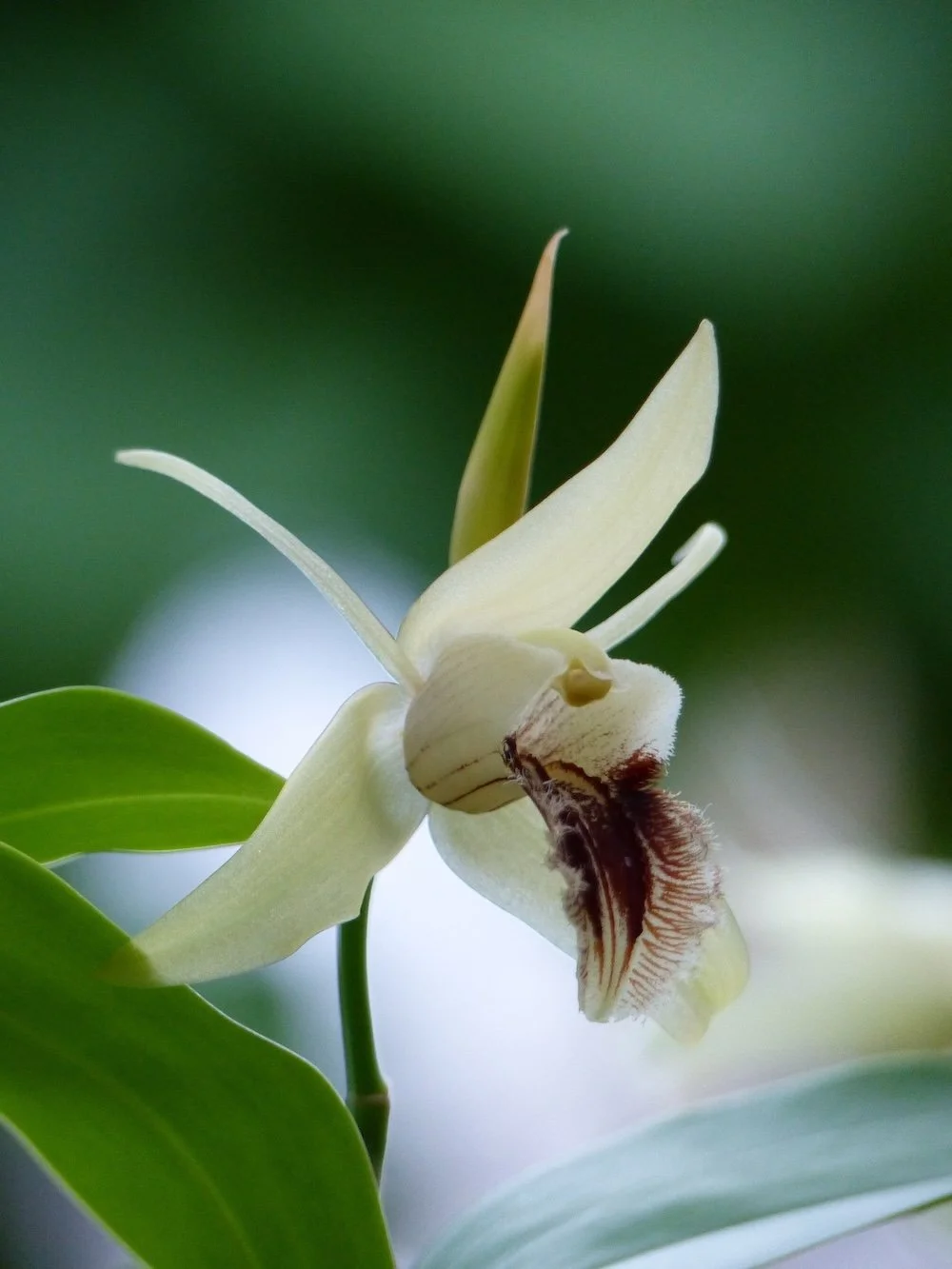
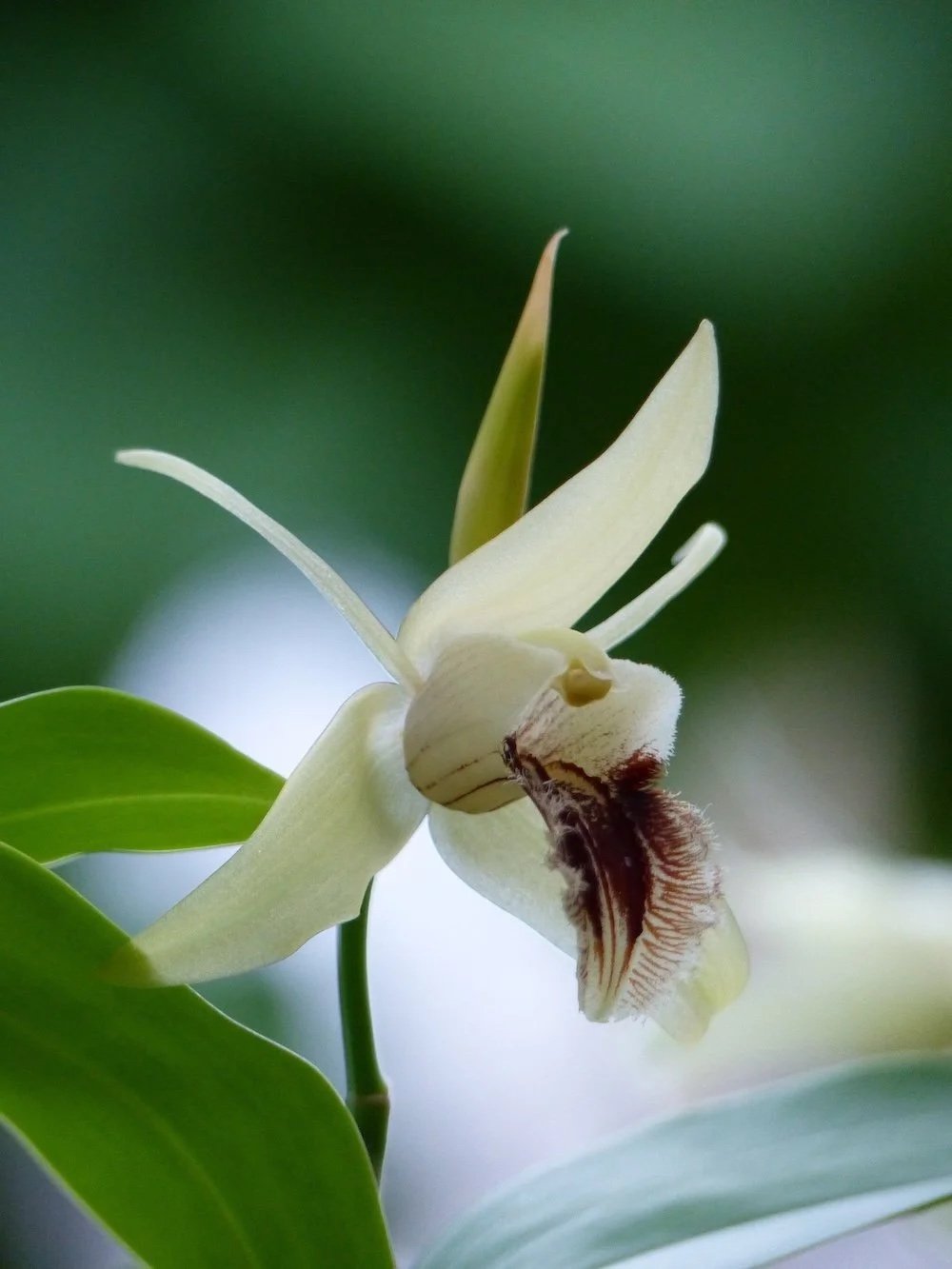
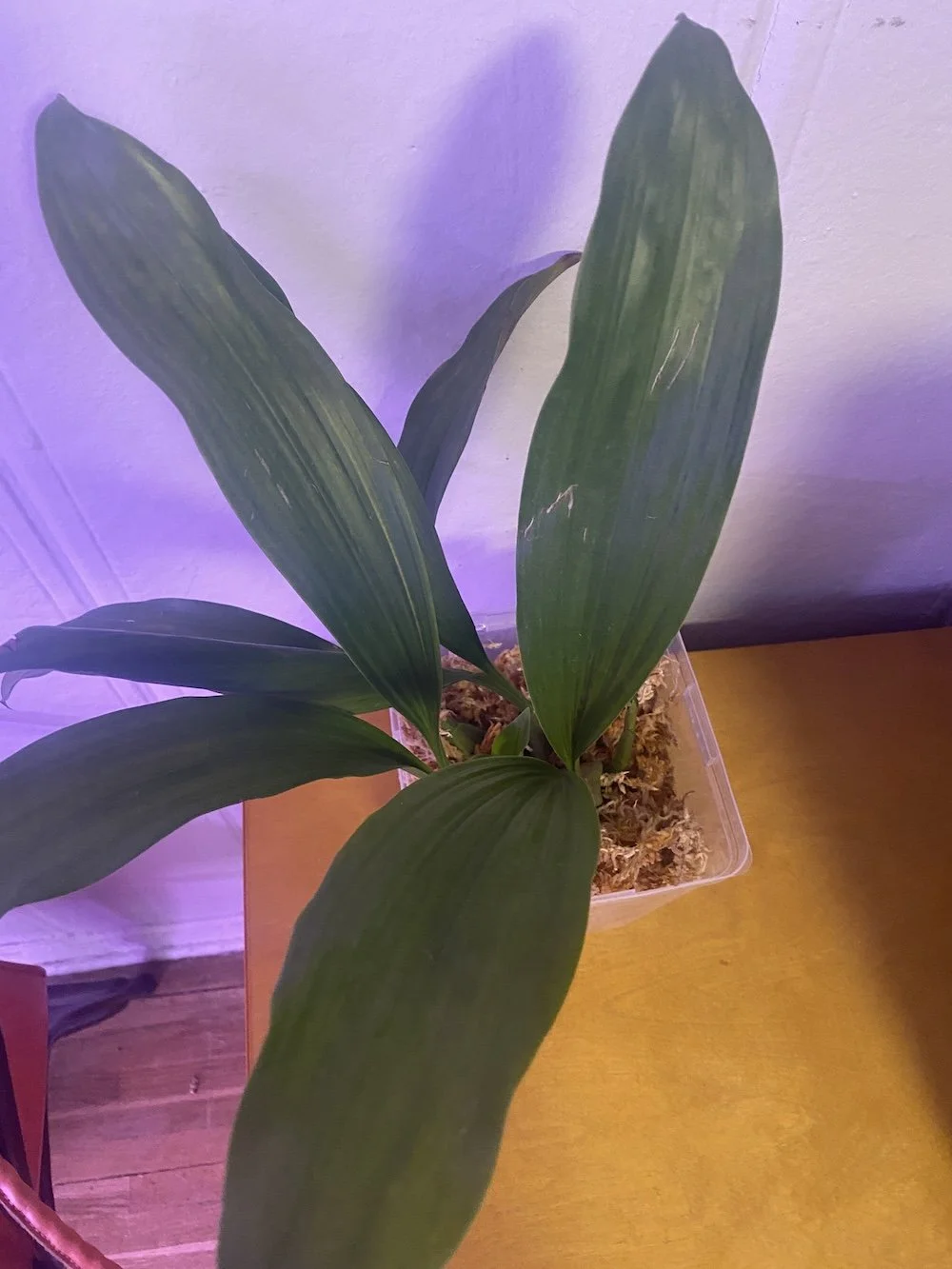
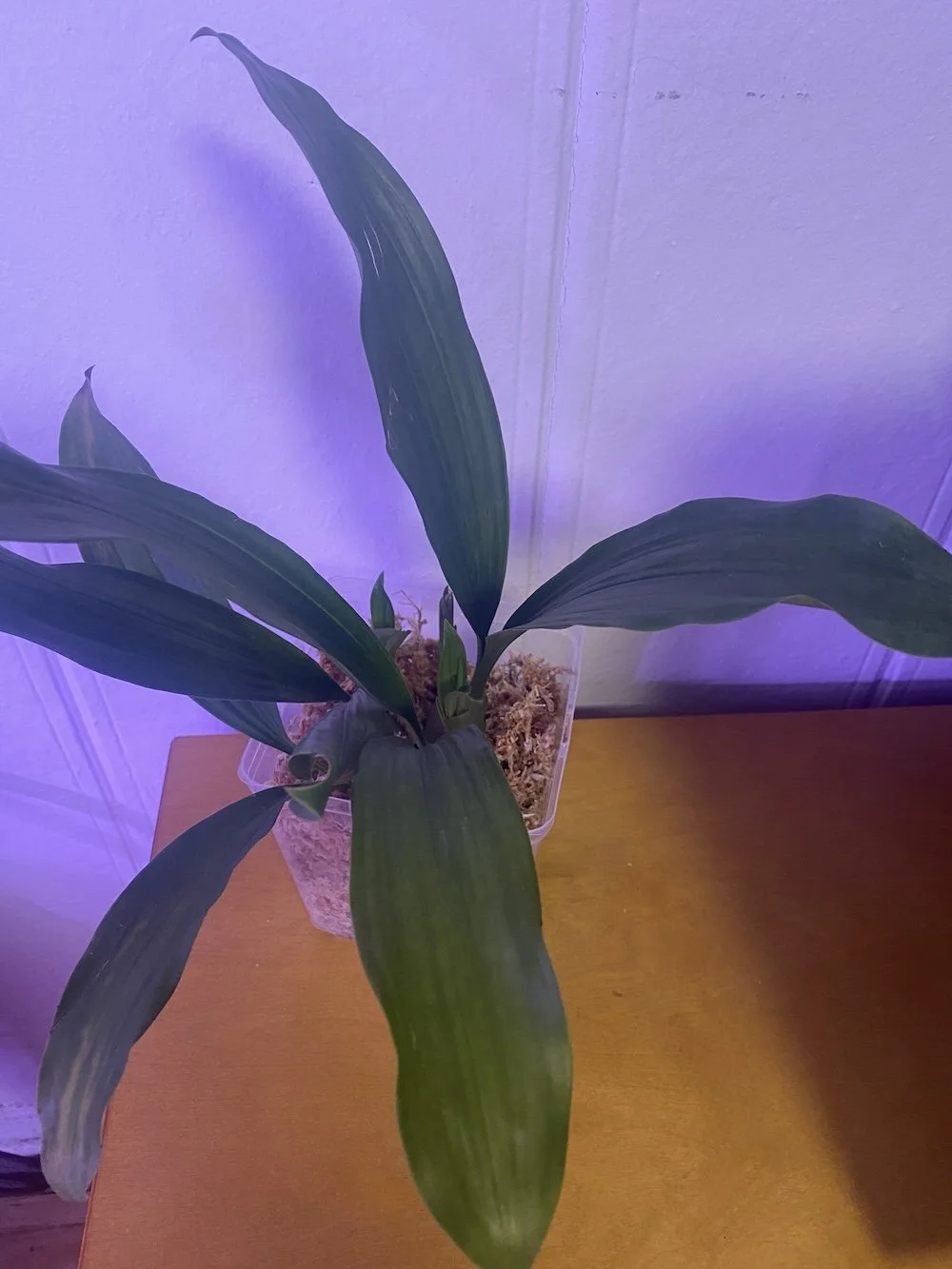
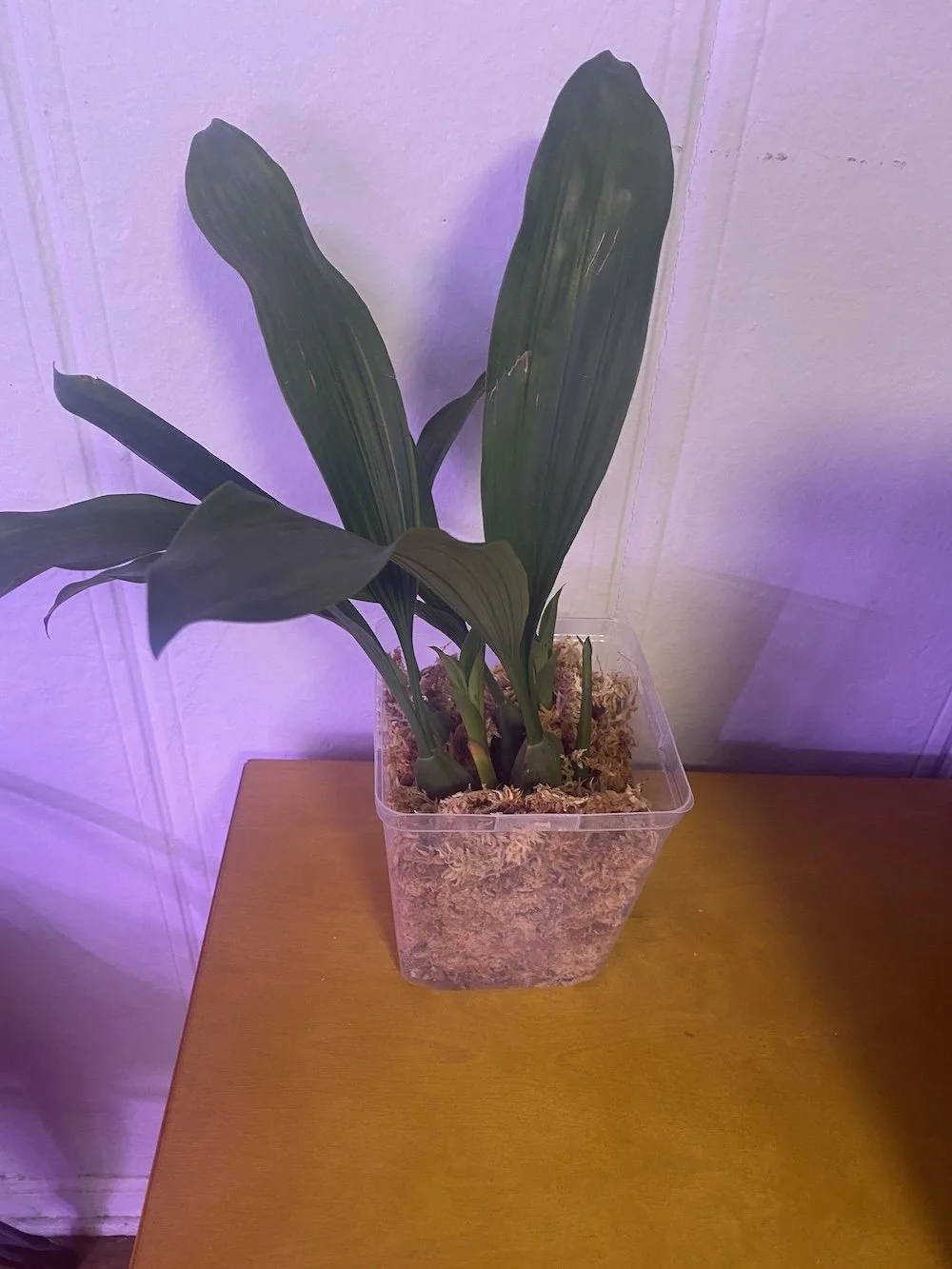
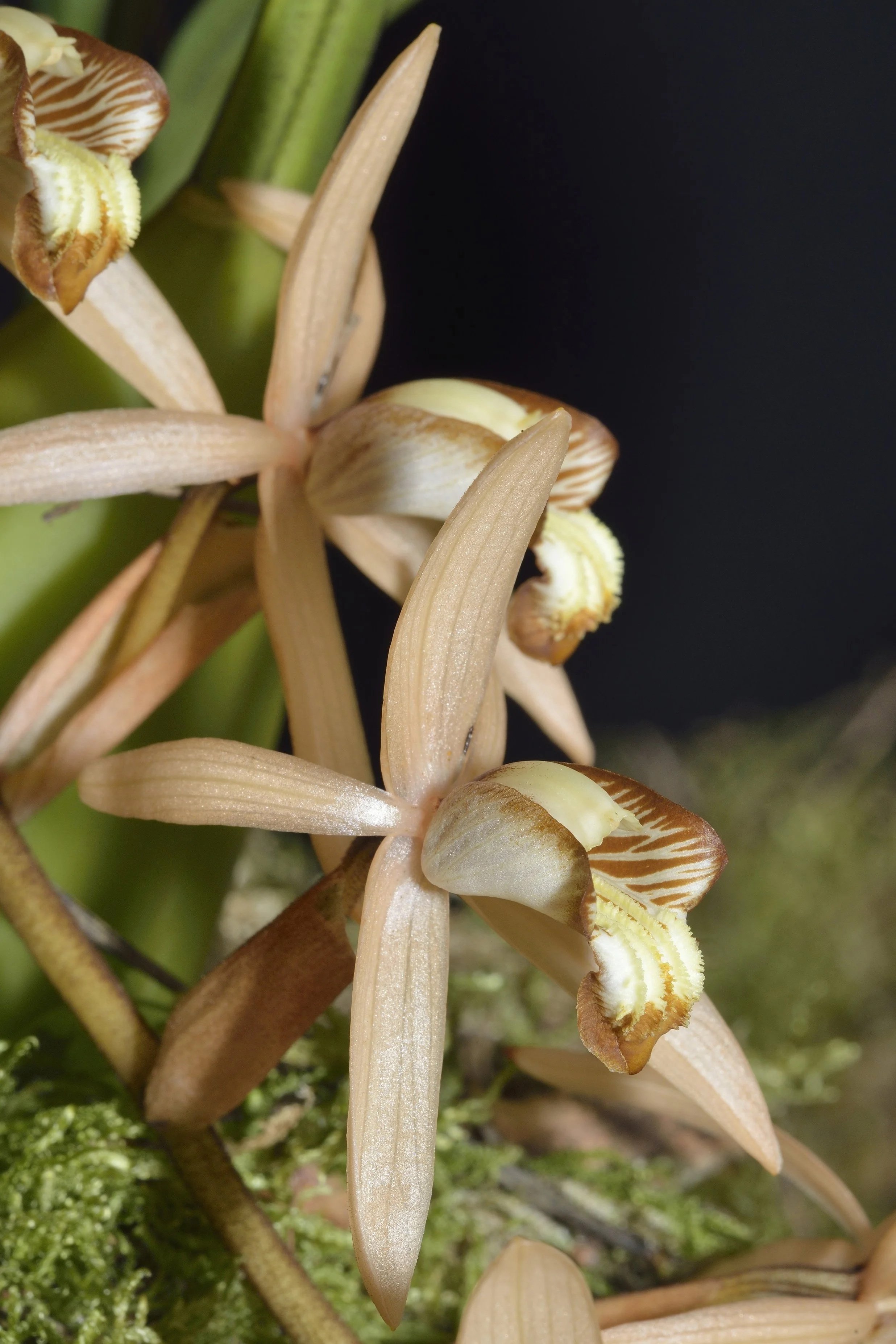
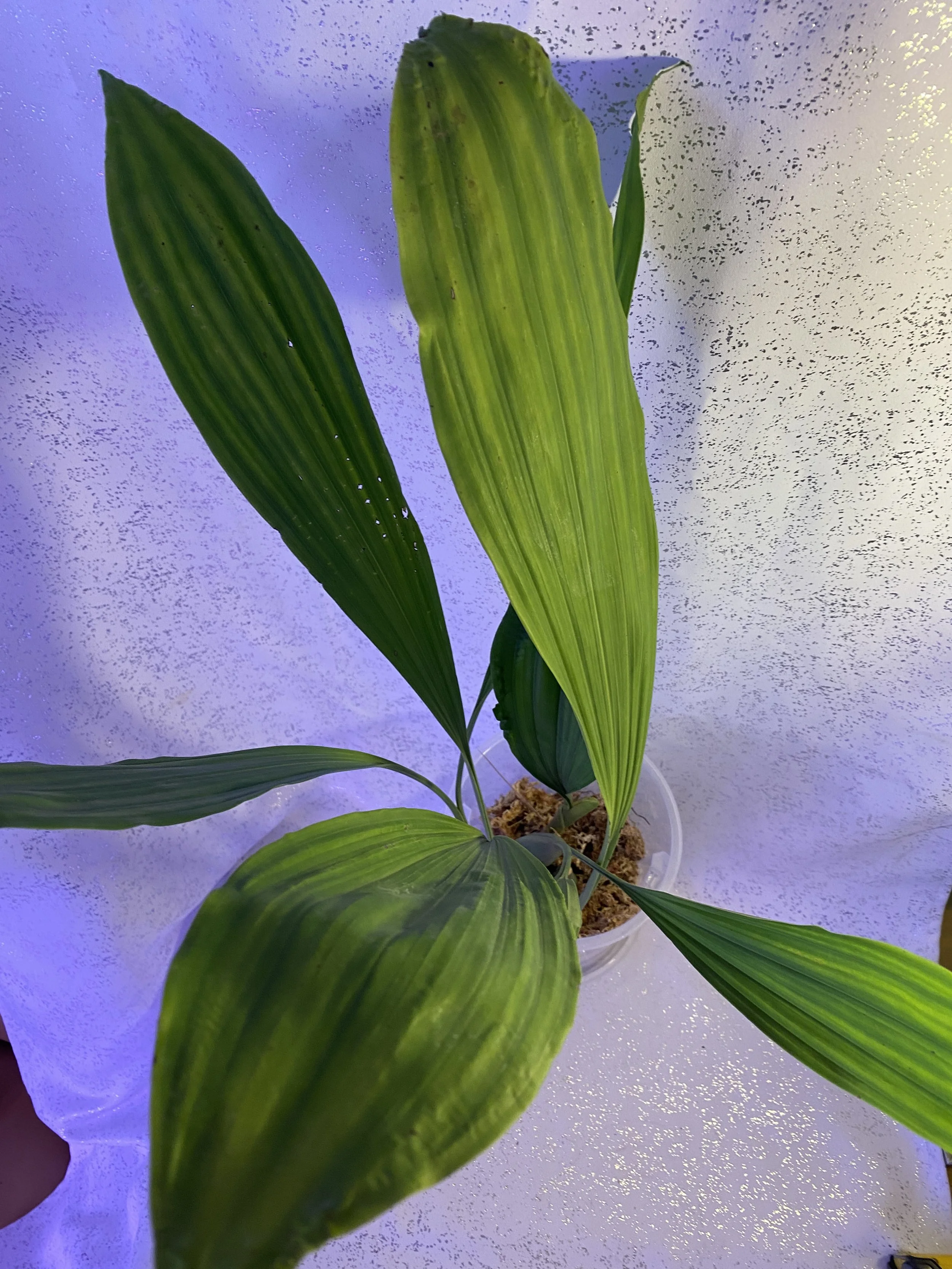
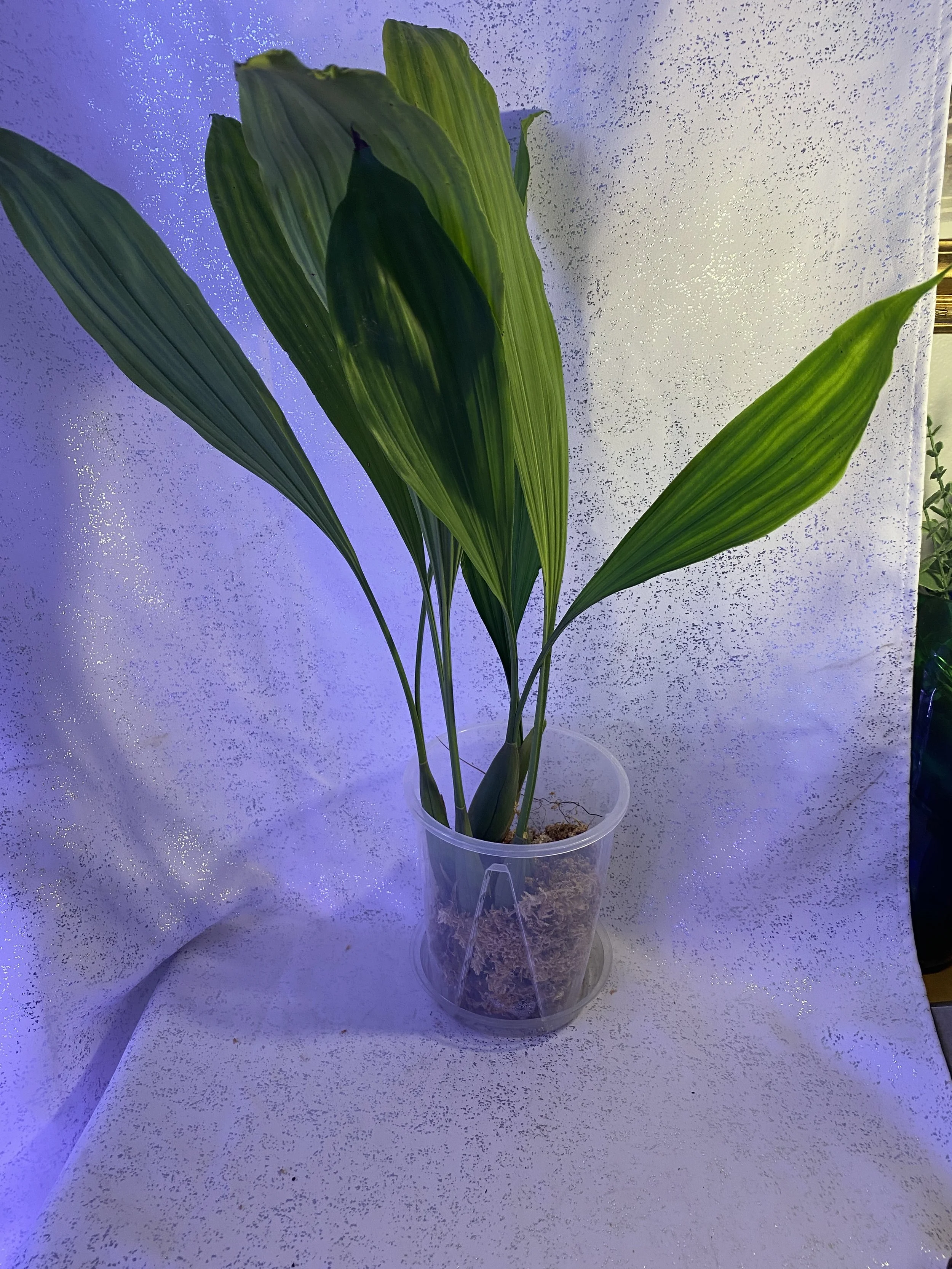
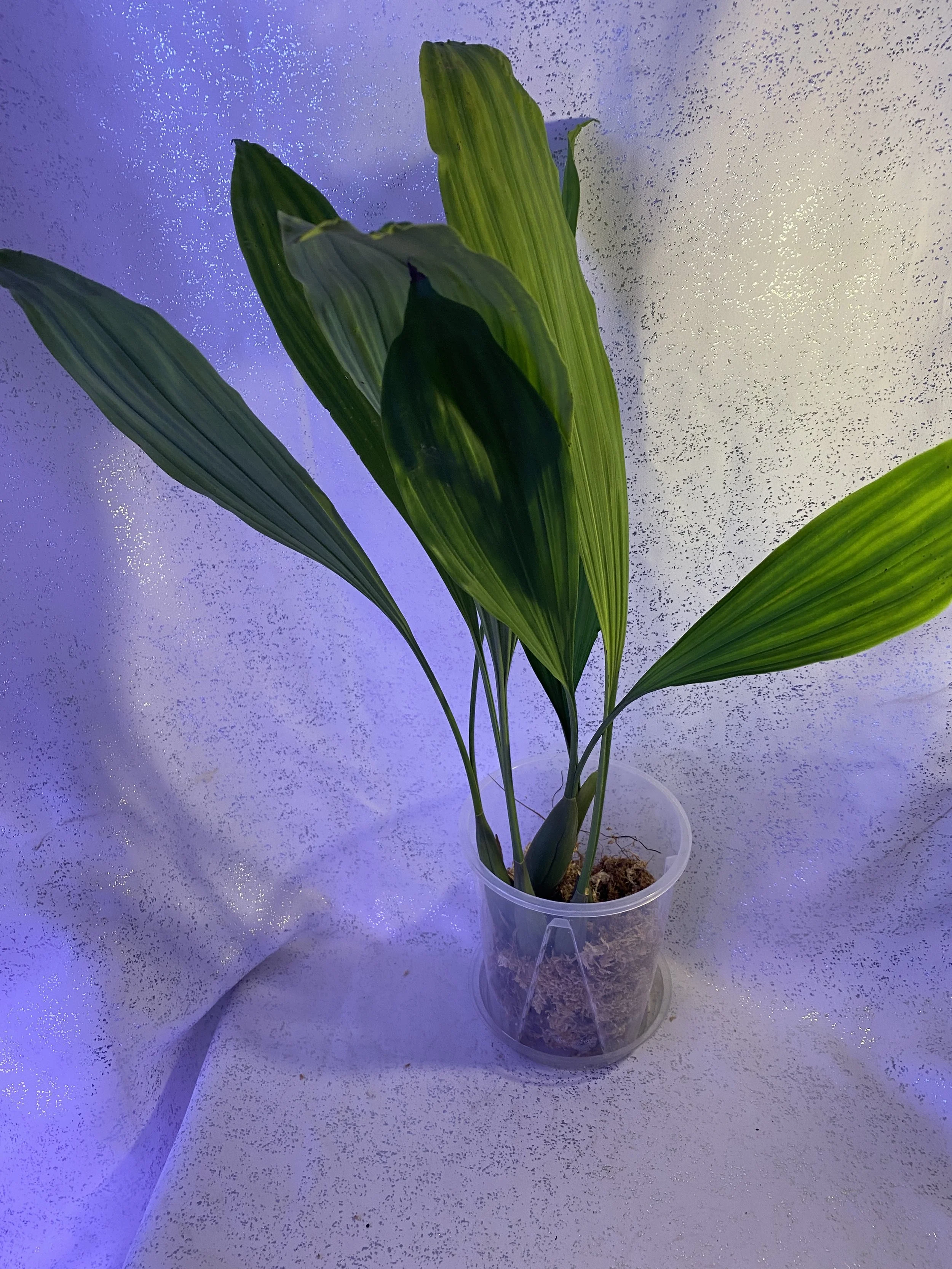
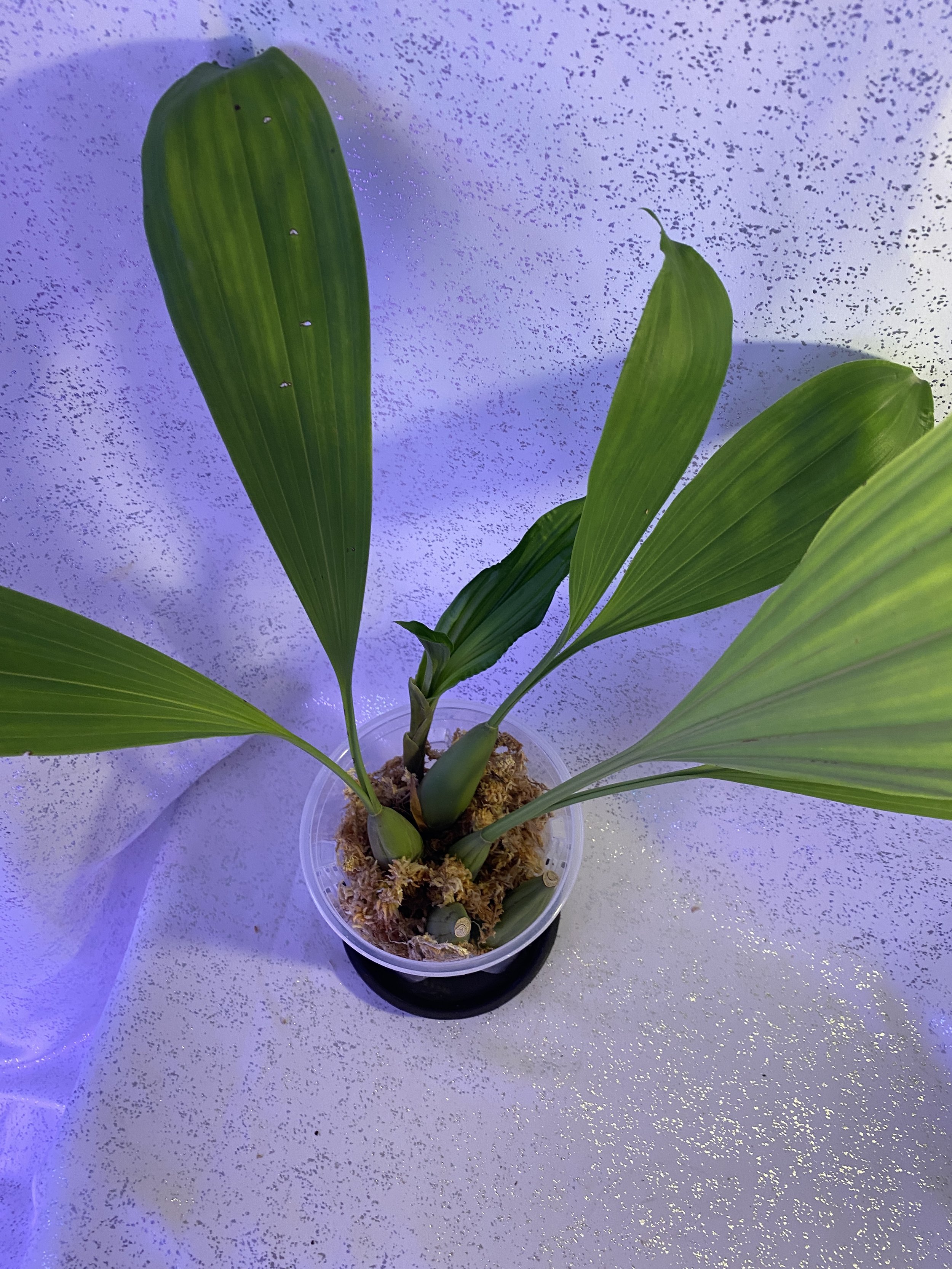
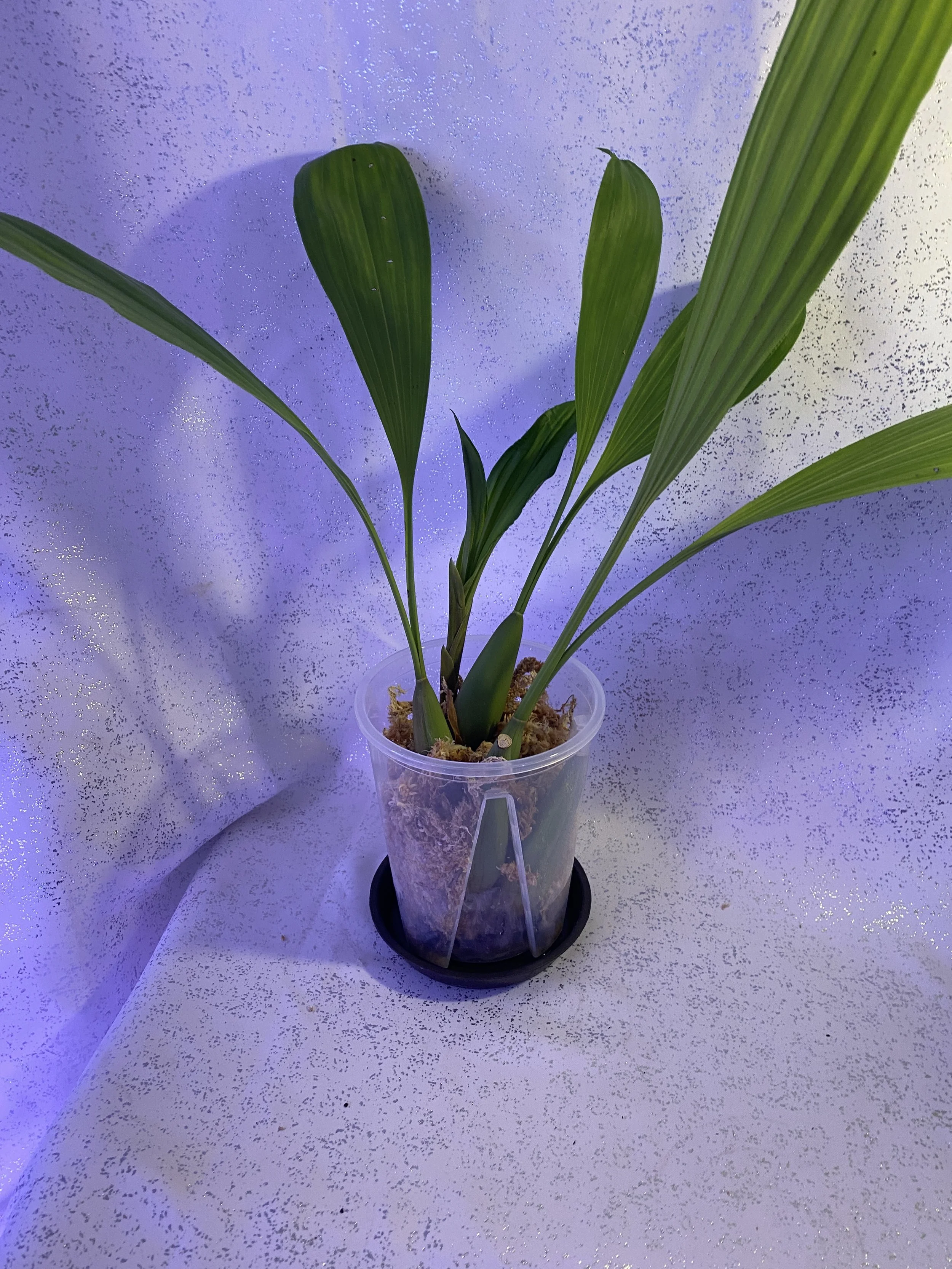
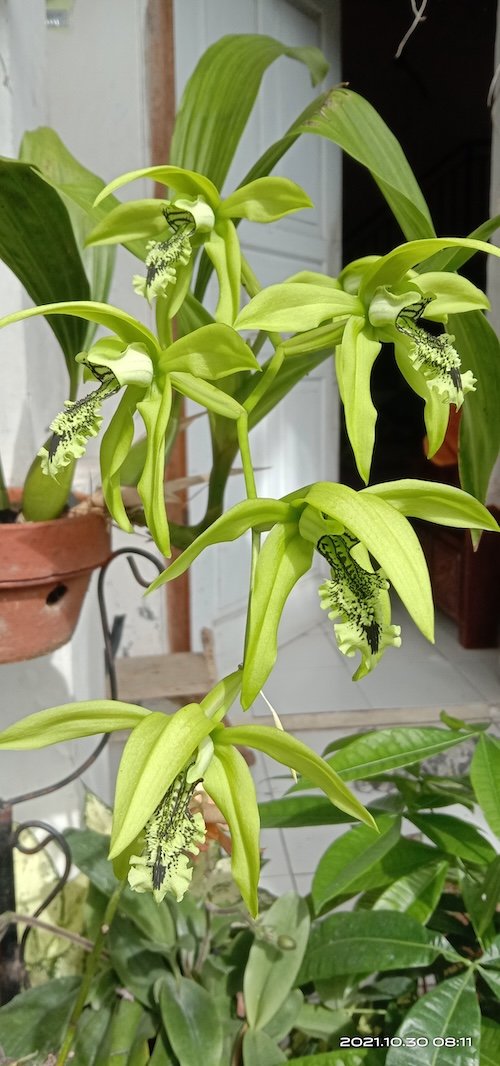
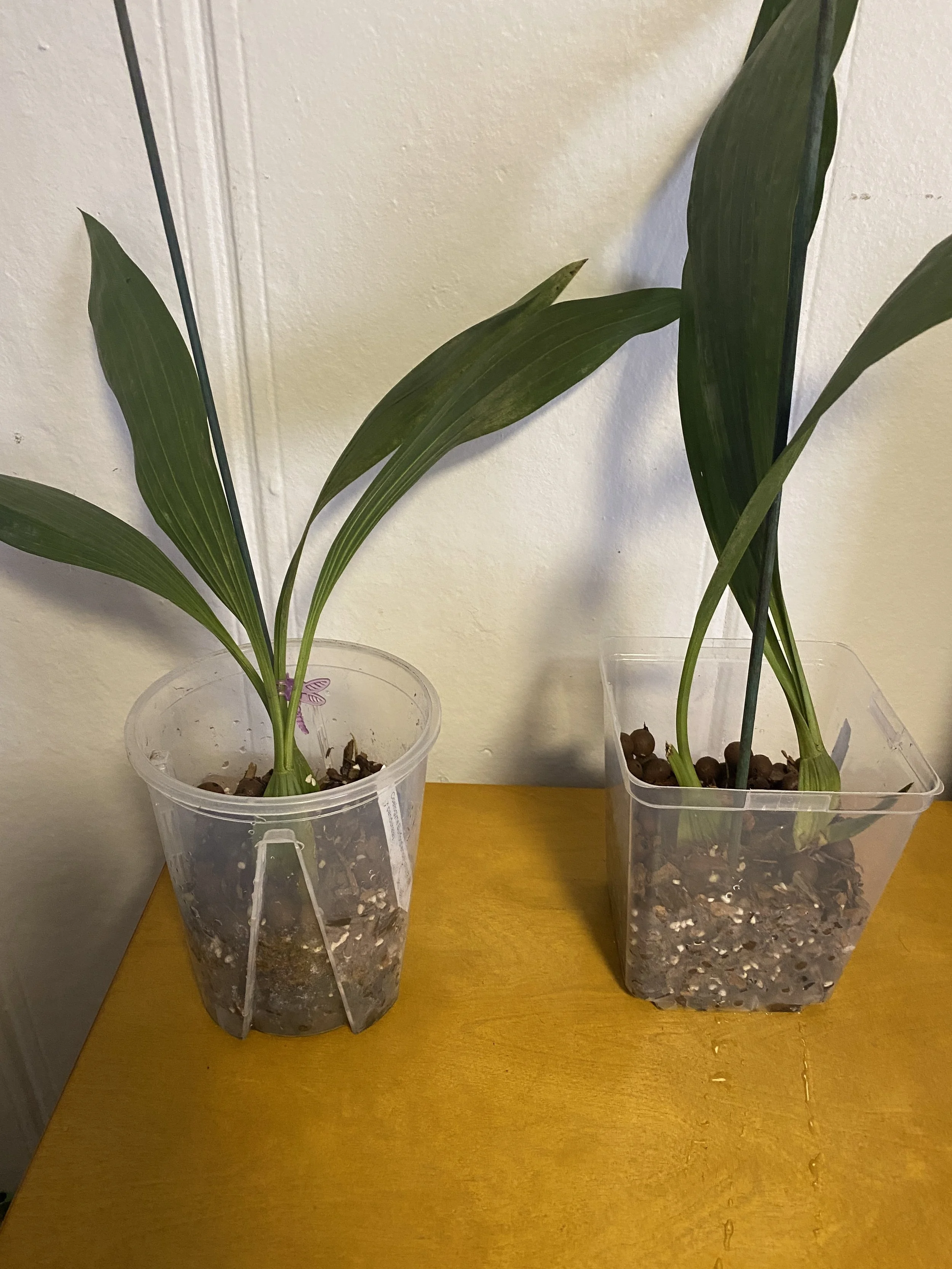
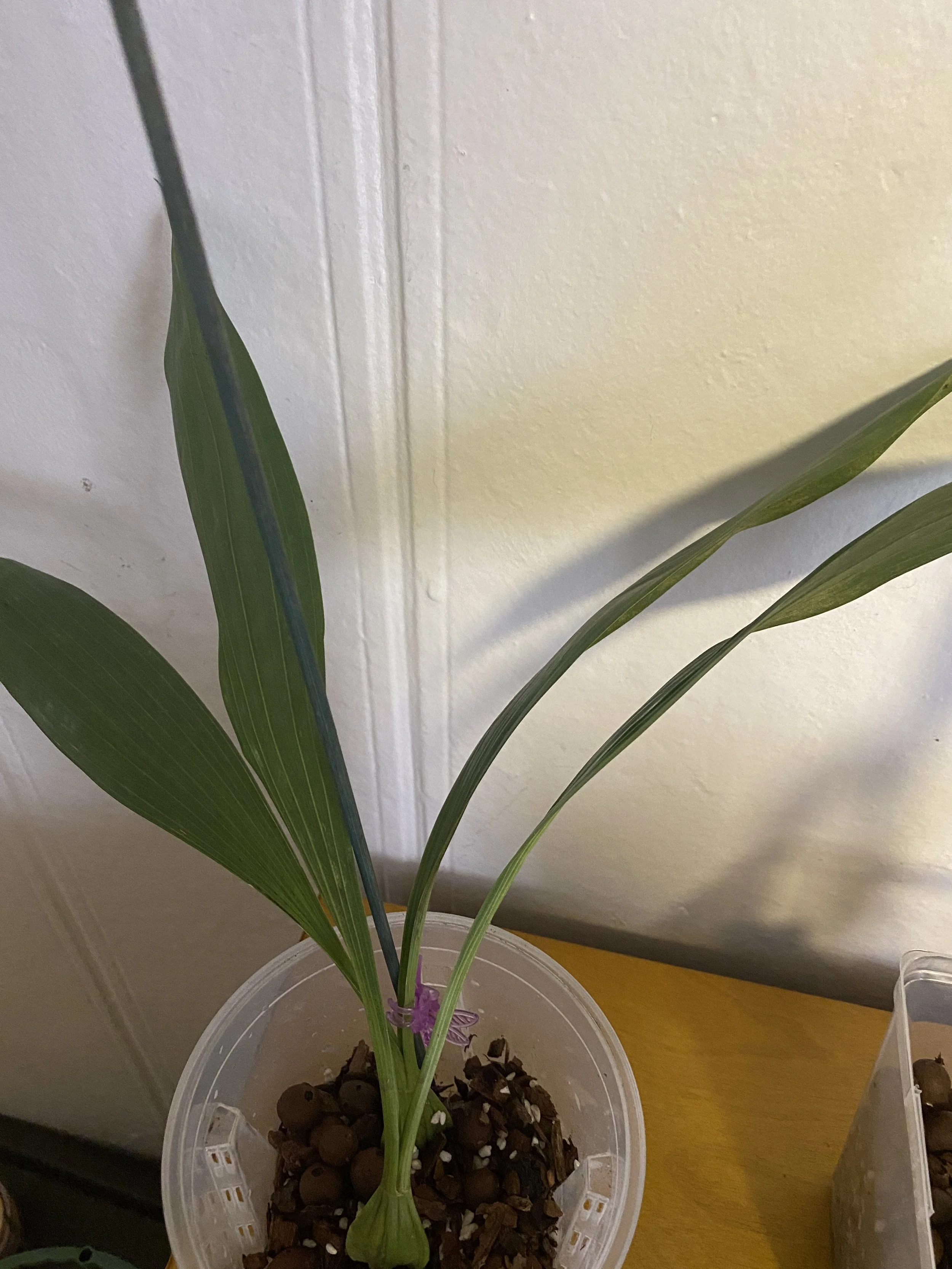
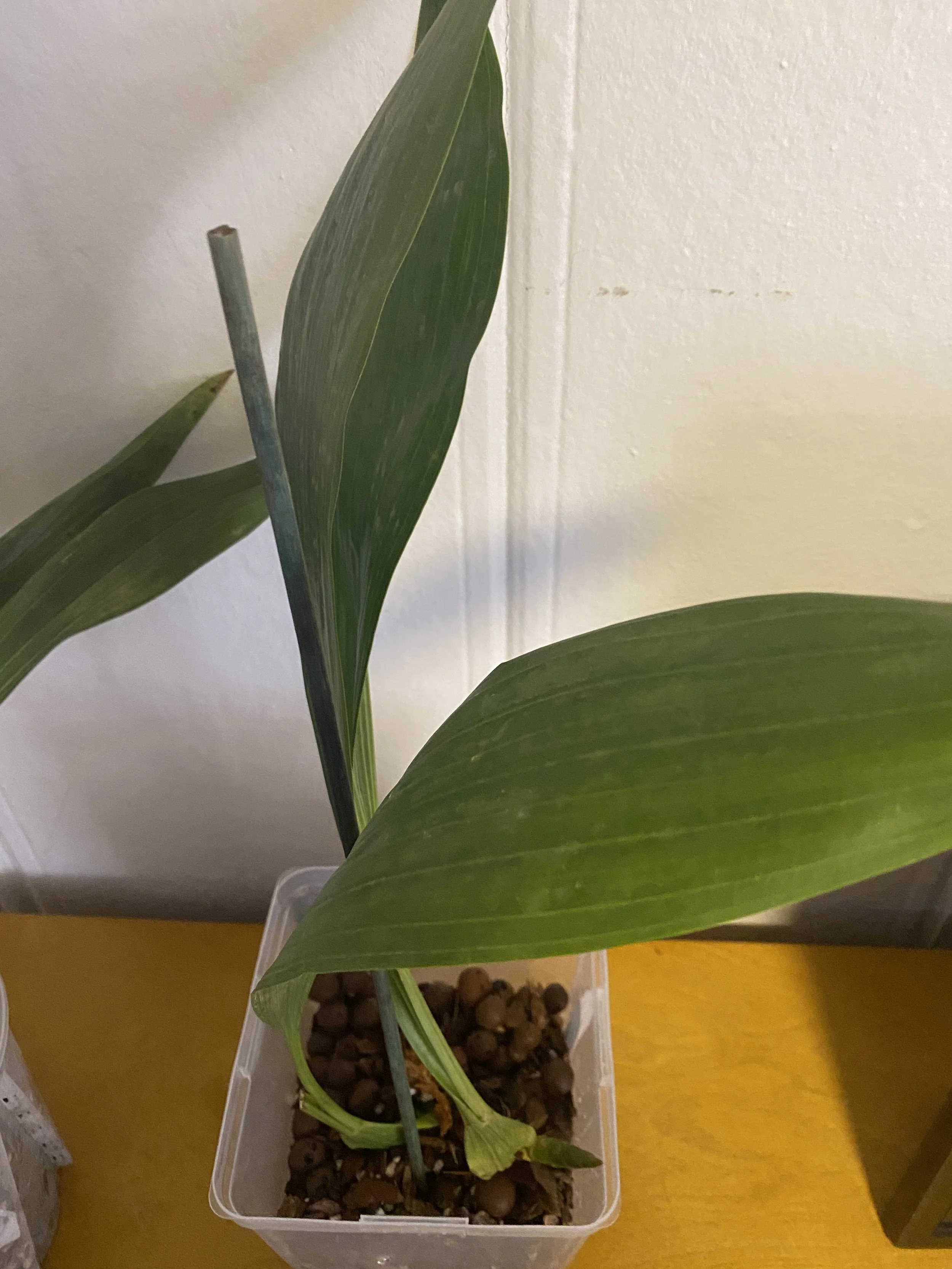
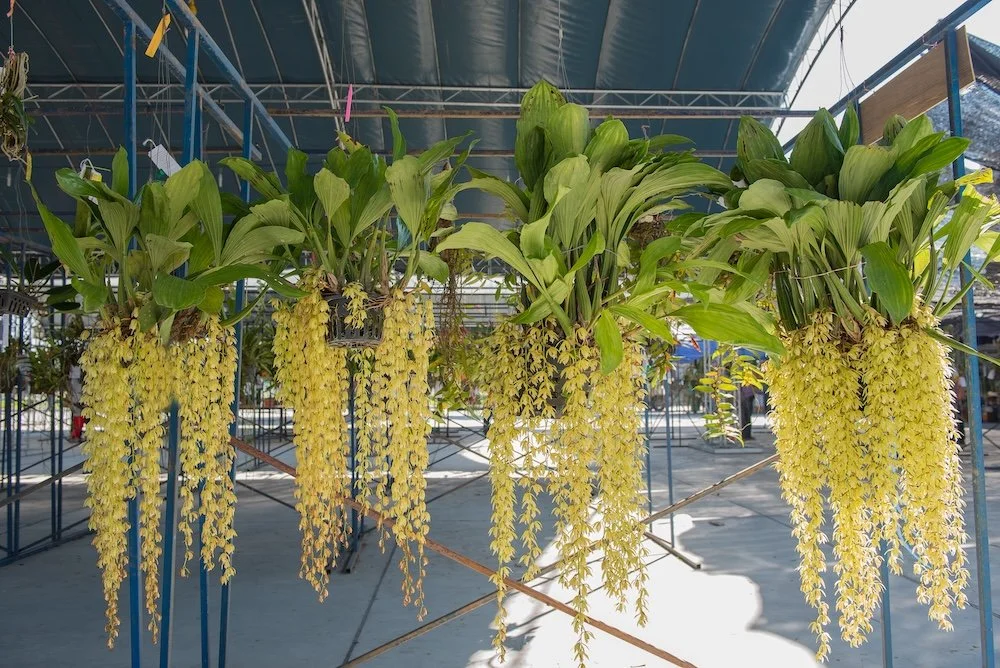
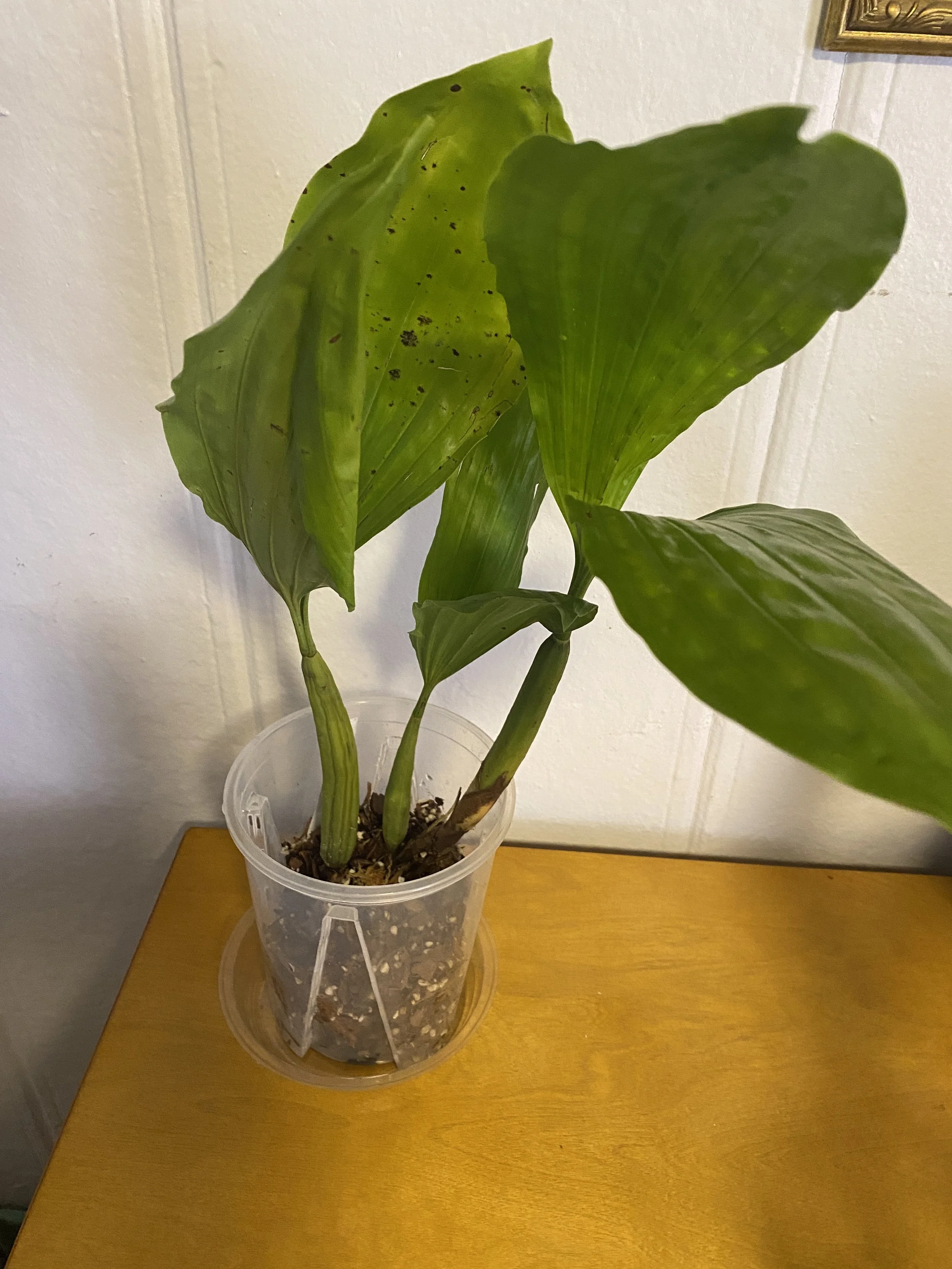
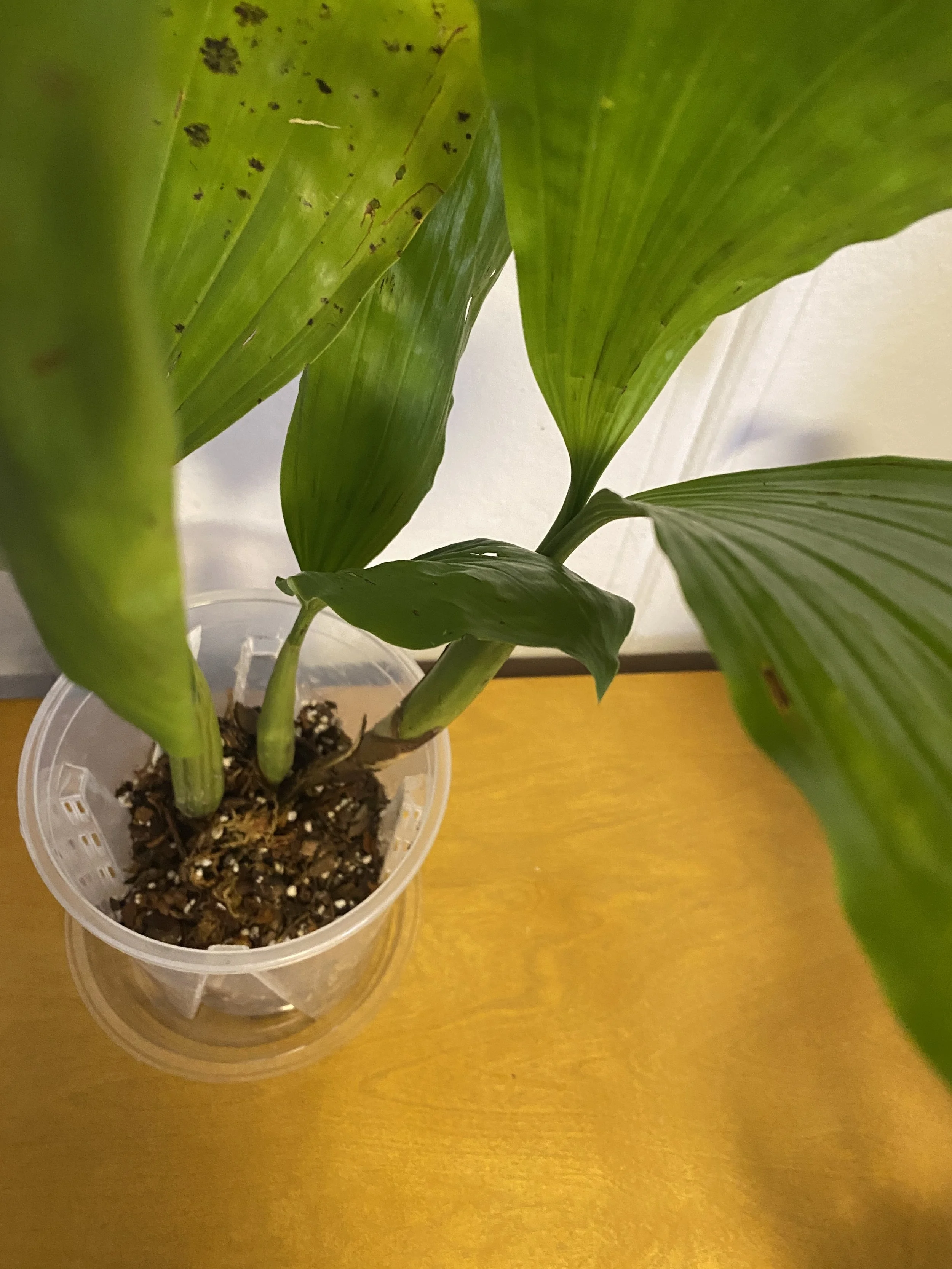
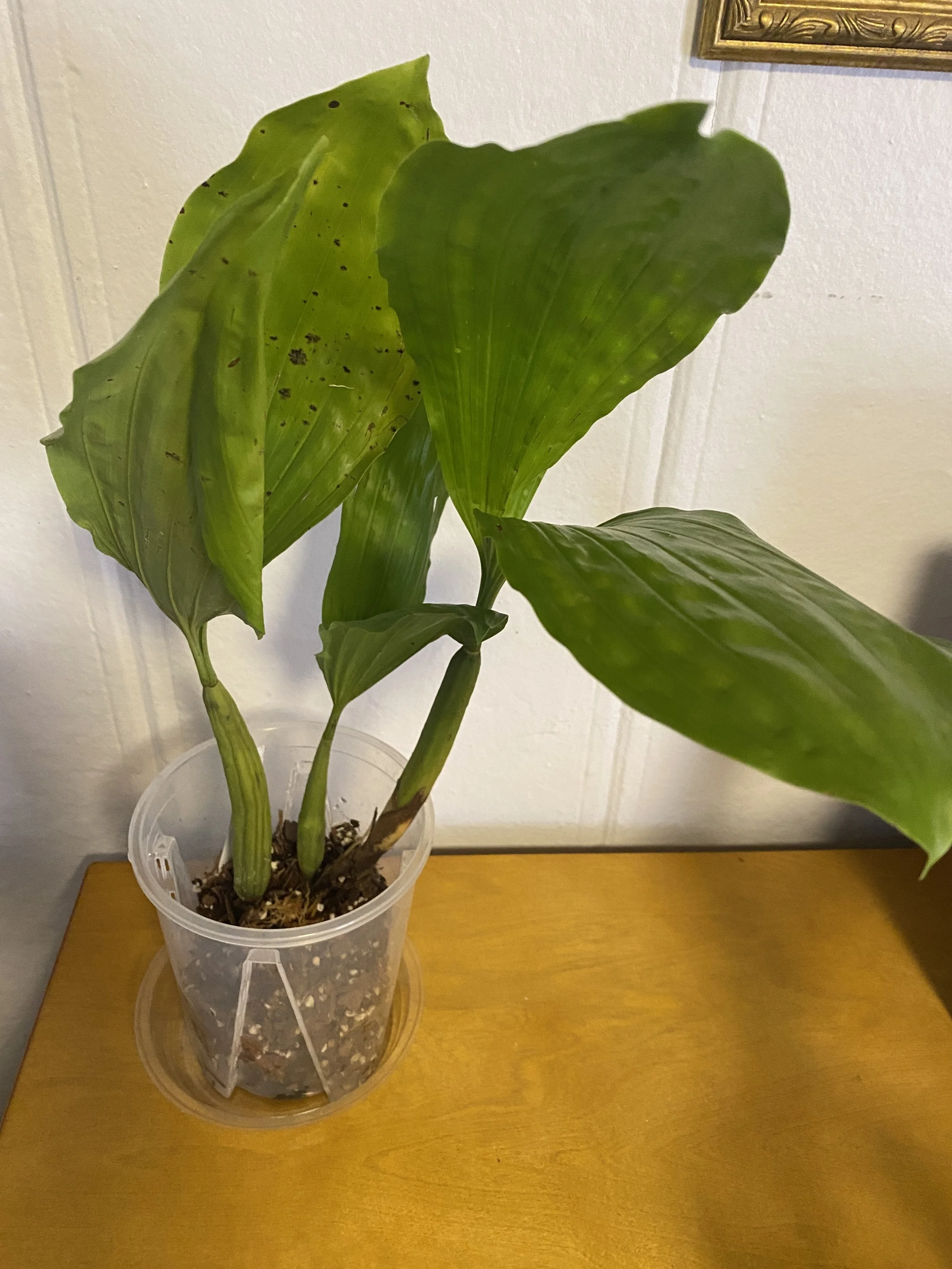
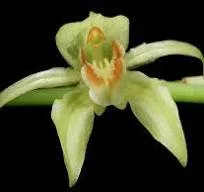
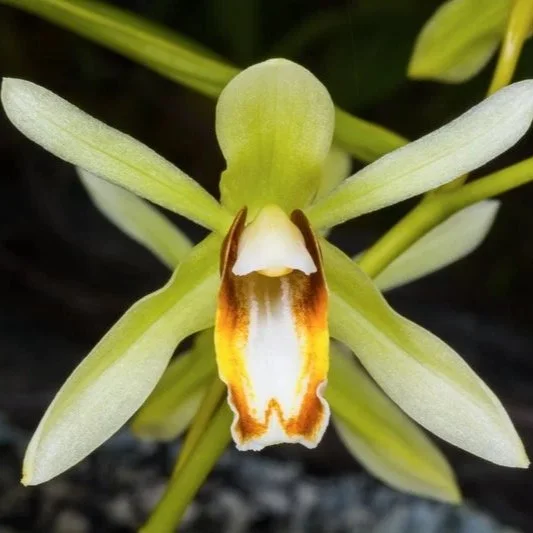
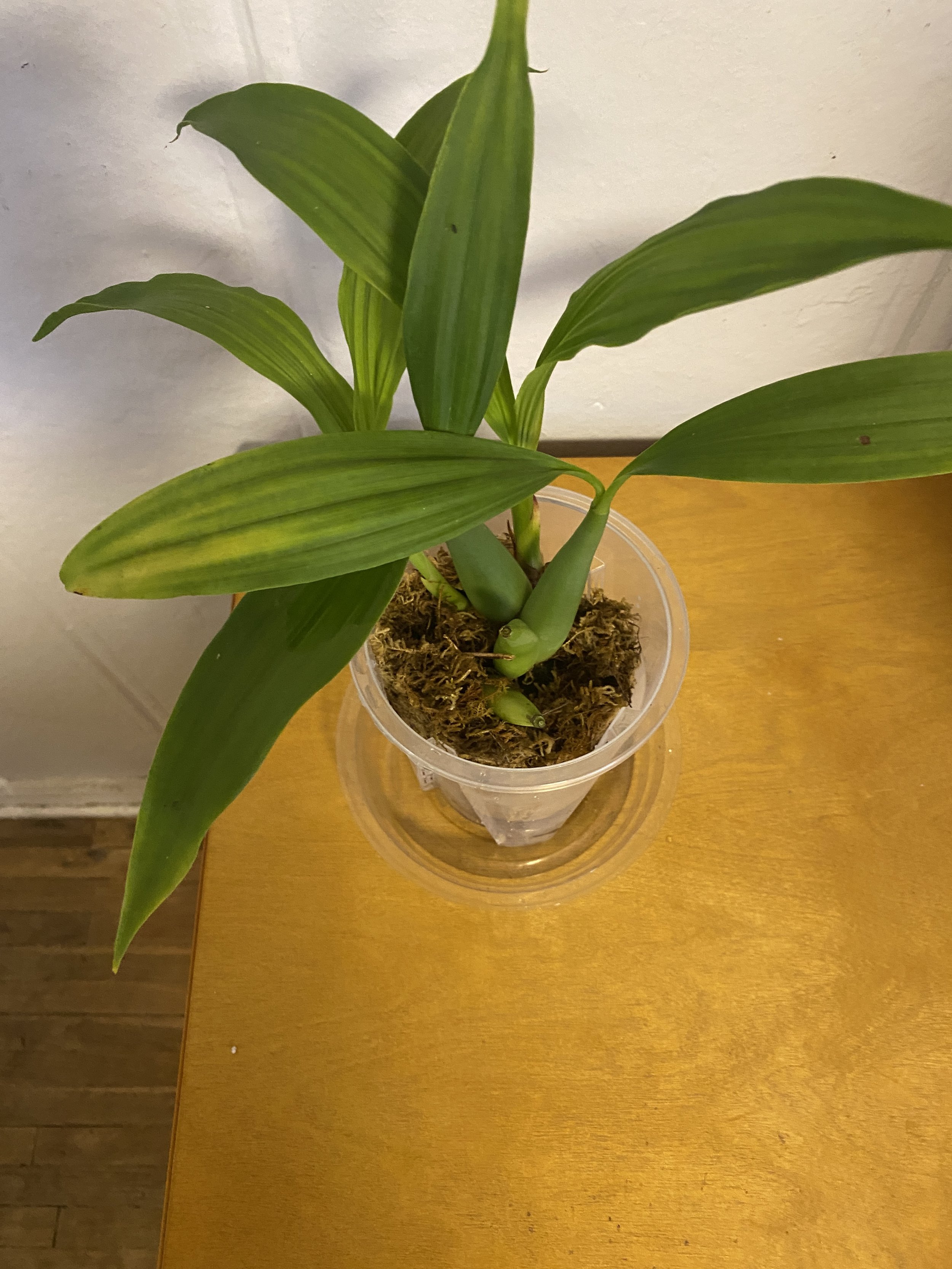
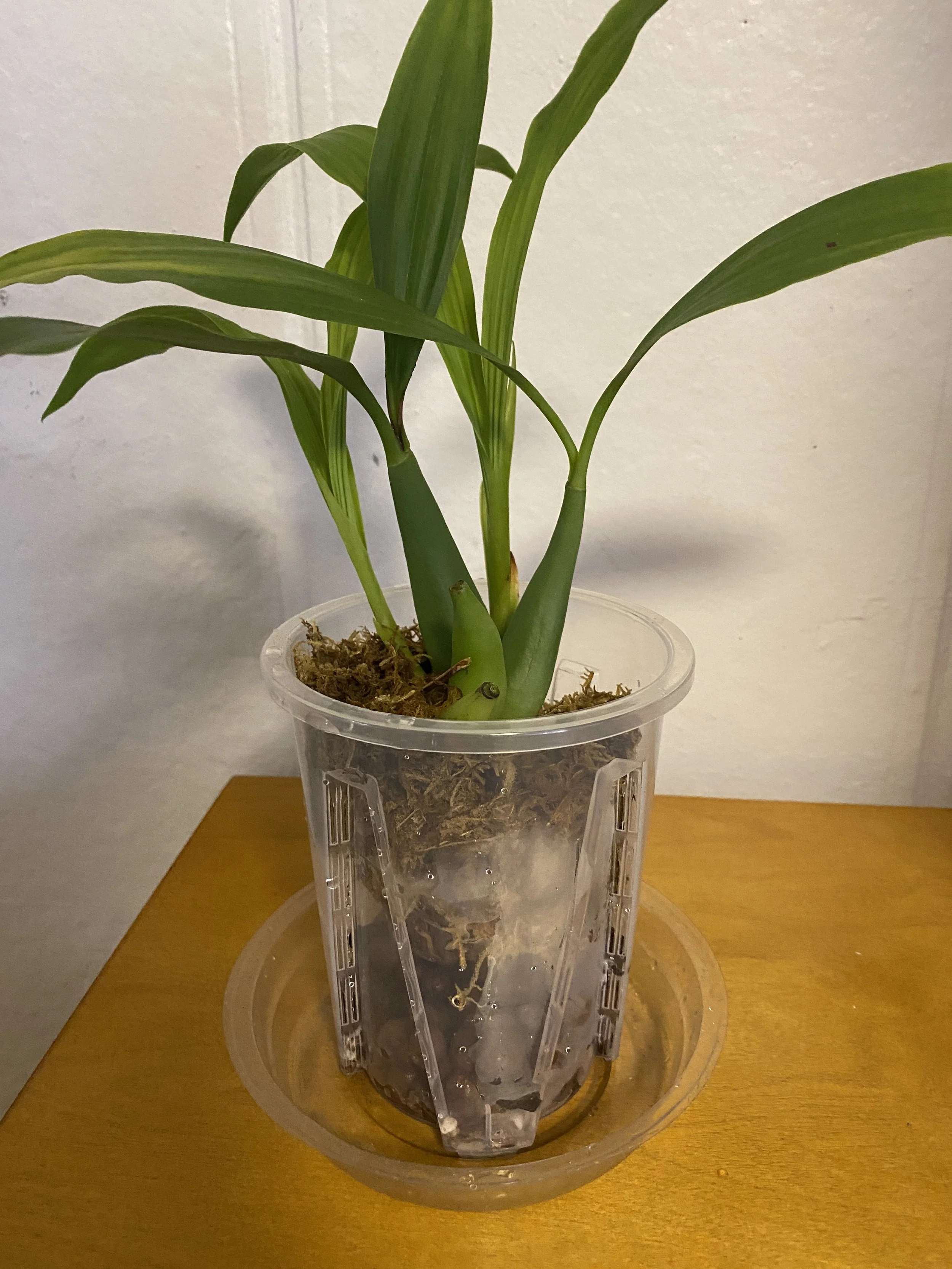
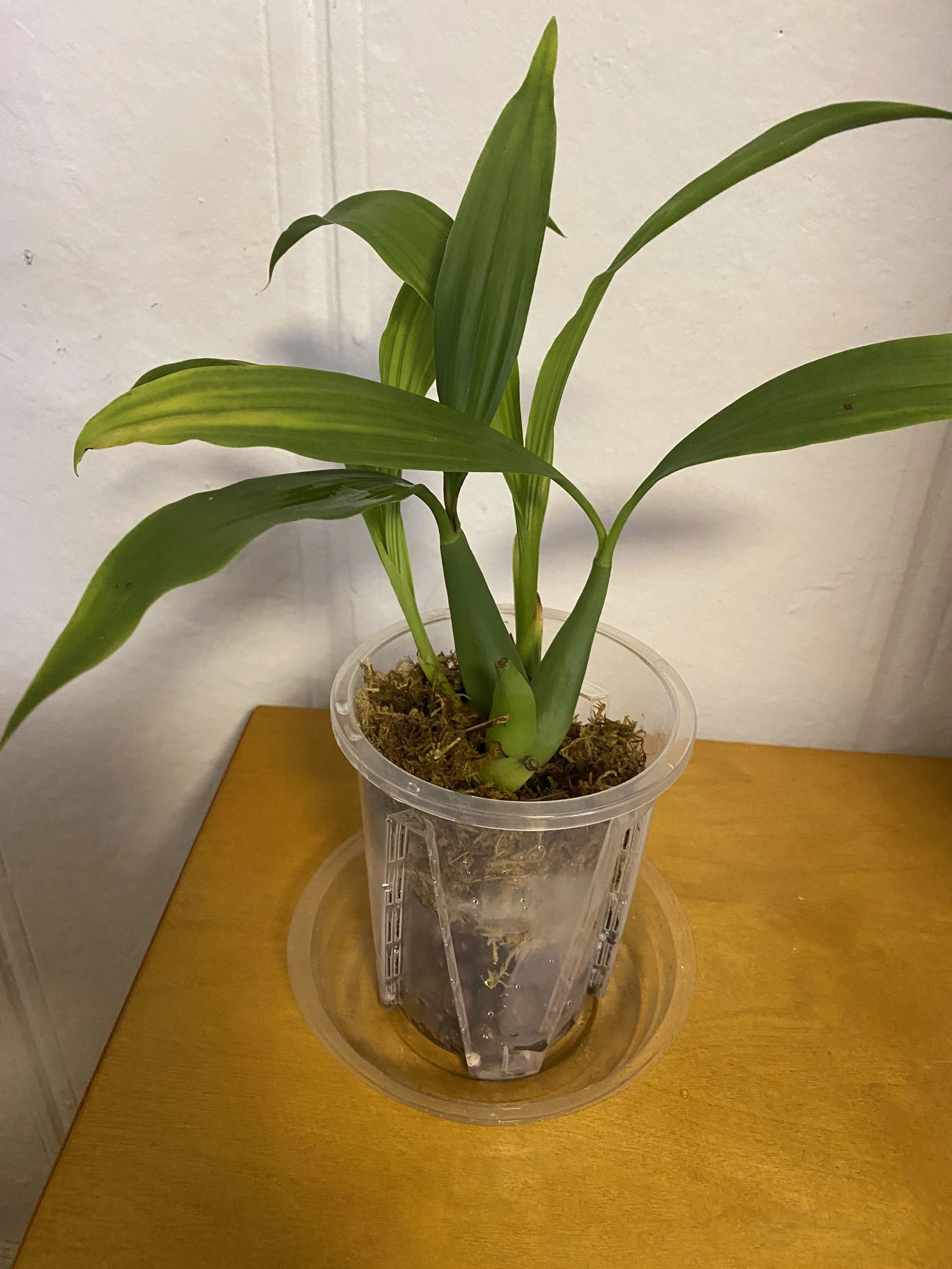
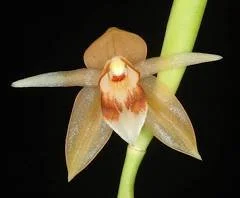
Coelogyne rubrolanata — a jewel among cool-growing Coelogynes, native to Mindanao island in the Philippines. Known commonly as the "red wooly Coelogyne," it features distinct reddish fuzzy hairs near the base of the column and produces unique zigzag flower spikes. The blooms brushed with delicate rose-red lip markings. Each inflorescence bears multiple long-lasting flowers with elegant, papery petals and a subtly fragrant presence that enhances any collection. Thriving in bright, filtered light and consistently cool to intermediate temperatures, C. rubrolanata rewards attentive growers with reliable bloom cycles and refined beauty suited to both display and collection. Available from O’Dowds Orchids — shipped nationwide.
Coelogyne rubrolanata — Care Instructions
Light
Bright, indirect light; comfortable in morning or late afternoon sun but avoid strong midday sun.
Intensity roughly equivalent to 1,500–3,000 foot-candles; leaves should be a medium green (not dark or pale yellow).
East- or north-facing windows are ideal; use sheer shade for west/south exposures.
Temperature
Intermediate to warm-intermediate range.
Day: 70–80°F (21–27°C). Night: 55–65°F (13–18°C).
Tolerates brief dips to low 50s°F (10–12°C) but avoid prolonged cold. Nighttime temperature drop of 10–15°F encourages growth and flowering.
Humidity & Airflow
Prefer 60–80% relative humidity.
Provide good air movement to reduce fungal risk—gentle circulating fans are beneficial.
Use humidity trays, pebble trays, or humidifiers in dry indoor environments.
Watering
Keep the mix evenly moist when plants are actively growing; do not let pseudobulbs shrivel.
Water thoroughly so water flows through the pot, then allow top of the medium to become slightly drier before the next watering.
In cooler or lower-light periods reduce frequency but do not allow the mix to dry out completely.
Use rainwater, distilled, or low-salt water where possible; Coelogyne species are sensitive to salts.
Potting Medium & Repotting
Use a well-draining, moisture-retentive mix: fine-grade fir bark blended with sphagnum moss or peat, plus some perlite or fine charcoal.
Mix should retain moisture yet allow air to the roots.
Repot every 2–3 years or when medium breaks down, ideally in spring after flowering or as new roots emerge.
When repotting, keep bulbs slightly above the mix surface to reduce rot risk.
Fertilizer
Feed with a balanced orchid fertilizer (20-20-20 or similar) at quarter to half strength every 1–2 weeks during active growth.
Alternatively, use a dilute fertilizer every time you water.
Reduce feeding to once a month or stop during winter/slow growth.
Occasionally apply a higher phosphorus bloom booster (low-nitrogen) shortly before and during spike development.
Flowering and Rest
Coelogyne rubrolanata typically flowers once or more per year; good light and a modest night temperature drop encourage spikes.
After flowering, maintain slightly reduced watering and feeding for a short rest period, then resume regular care as new growth begins.
Pests & Disease
Monitor for scale, mealybugs, spider mites, and slugs/snails. Treat infestations promptly with horticultural oil, insecticidal soap, or appropriate systemic controls.
Prevent fungal and bacterial rot by ensuring good drainage, avoiding prolonged leaf wetness, and providing airflow. Remove any rotting roots or pseudobulbs when repotting.
Shipping and acclimation
When receiving a plant, acclimate slowly: open packaging promptly, keep in bright, humid, shaded conditions for a week before resuming full cultural routine.
Do not repot until after the first bloom.
With attentive light, steady moisture, good humidity and airflow, Coelogyne rubrolanata rewards with elegant, long-lasting blooms and refined growth habit.
Coelogyne rubrolanata — a jewel among cool-growing Coelogynes, native to Mindanao island in the Philippines. Known commonly as the "red wooly Coelogyne," it features distinct reddish fuzzy hairs near the base of the column and produces unique zigzag flower spikes. The blooms brushed with delicate rose-red lip markings. Each inflorescence bears multiple long-lasting flowers with elegant, papery petals and a subtly fragrant presence that enhances any collection. Thriving in bright, filtered light and consistently cool to intermediate temperatures, C. rubrolanata rewards attentive growers with reliable bloom cycles and refined beauty suited to both display and collection. Available from O’Dowds Orchids — shipped nationwide.
Coelogyne rubrolanata — Care Instructions
Light
Bright, indirect light; comfortable in morning or late afternoon sun but avoid strong midday sun.
Intensity roughly equivalent to 1,500–3,000 foot-candles; leaves should be a medium green (not dark or pale yellow).
East- or north-facing windows are ideal; use sheer shade for west/south exposures.
Temperature
Intermediate to warm-intermediate range.
Day: 70–80°F (21–27°C). Night: 55–65°F (13–18°C).
Tolerates brief dips to low 50s°F (10–12°C) but avoid prolonged cold. Nighttime temperature drop of 10–15°F encourages growth and flowering.
Humidity & Airflow
Prefer 60–80% relative humidity.
Provide good air movement to reduce fungal risk—gentle circulating fans are beneficial.
Use humidity trays, pebble trays, or humidifiers in dry indoor environments.
Watering
Keep the mix evenly moist when plants are actively growing; do not let pseudobulbs shrivel.
Water thoroughly so water flows through the pot, then allow top of the medium to become slightly drier before the next watering.
In cooler or lower-light periods reduce frequency but do not allow the mix to dry out completely.
Use rainwater, distilled, or low-salt water where possible; Coelogyne species are sensitive to salts.
Potting Medium & Repotting
Use a well-draining, moisture-retentive mix: fine-grade fir bark blended with sphagnum moss or peat, plus some perlite or fine charcoal.
Mix should retain moisture yet allow air to the roots.
Repot every 2–3 years or when medium breaks down, ideally in spring after flowering or as new roots emerge.
When repotting, keep bulbs slightly above the mix surface to reduce rot risk.
Fertilizer
Feed with a balanced orchid fertilizer (20-20-20 or similar) at quarter to half strength every 1–2 weeks during active growth.
Alternatively, use a dilute fertilizer every time you water.
Reduce feeding to once a month or stop during winter/slow growth.
Occasionally apply a higher phosphorus bloom booster (low-nitrogen) shortly before and during spike development.
Flowering and Rest
Coelogyne rubrolanata typically flowers once or more per year; good light and a modest night temperature drop encourage spikes.
After flowering, maintain slightly reduced watering and feeding for a short rest period, then resume regular care as new growth begins.
Pests & Disease
Monitor for scale, mealybugs, spider mites, and slugs/snails. Treat infestations promptly with horticultural oil, insecticidal soap, or appropriate systemic controls.
Prevent fungal and bacterial rot by ensuring good drainage, avoiding prolonged leaf wetness, and providing airflow. Remove any rotting roots or pseudobulbs when repotting.
Shipping and acclimation
When receiving a plant, acclimate slowly: open packaging promptly, keep in bright, humid, shaded conditions for a week before resuming full cultural routine.
Do not repot until after the first bloom.
With attentive light, steady moisture, good humidity and airflow, Coelogyne rubrolanata rewards with elegant, long-lasting blooms and refined growth habit.